The German warp-knitting machinery manufacturer is introducing two Jacquard raschel machines featuring innovative wireless control technology, improved production efficiency and greater design flexibility.
German textile machinery manufacturer Karl Mayer is preparing to showcase two new Jacquard double-needle-bar raschel machines, RDJ 7/3 and RDJ 6/2, at its Product Show in Changzhou, China, alongside ITMA Asia + CITME 2026.
The company claims the machines deliver up to 70% higher productivity than comparable equipment, targeting manufacturers of spacer fabrics for footwear, sportswear and athleisure applications.
Advanced Jacquard Expands Fabric Design
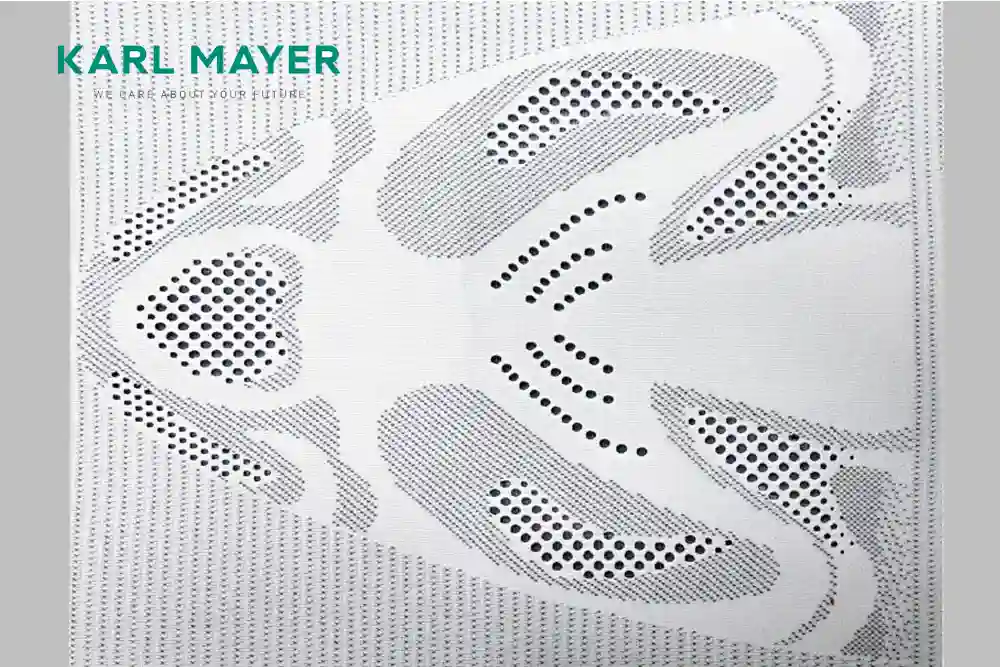
The RDJ 7/3 incorporates three Jacquard bars, enabling complex three-dimensional textile structures with precisely positioned functional zones.
Manufacturers can integrate ventilation openings, reinforced areas, embossed surfaces and multidimensional patterns directly into knitted fabrics.
These capabilities allow footwear producers to combine breathability, stability, comfort and visual differentiation within a single textile construction.
The RDJ 6/2, operating at E32 gauge, addresses demand for finer yarns and lightweight fabrics.
Karl Mayer also positions its fine-gauge warp knits as a potentially cost-effective alternative to circular-knitted fabrics in selected apparel applications.
Wireless Technology Simplifies Maintenance
A central innovation is Karl Mayer’s Wireless Jacquard control system, which uses conductive tracks integrated into Jacquard bars instead of conventional cable assemblies.
Previously, certain machine retrofits required handling up to 240 cable strings, each containing 17 ribbon cables.
The new plug-in piezoelectric actuator arrangement simplifies component replacement, improves access to yarns and reduces maintenance complexity.
Removing conventional cabling also creates space for additional Jacquard bars and counter-lapping movements, expanding possible fabric structures.
Karl Mayer plans to extend the technology to its RASCHELTRONIC range.
Productivity Gains Require Industrial Validation
Shorter production cycles could help manufacturers accommodate smaller orders and respond faster to changing footwear collections.
Karl Mayer will demonstrate the machines and new textile developments in Changzhou during November 19–23, alongside the Shanghai exhibition.
The commercial test will be whether the claimed productivity improvements translate into lower fabric production costs, while maintaining quality, machine reliability and design flexibility.
Machine prices, energy consumption and independently verified comparative production data have not been disclosed.