

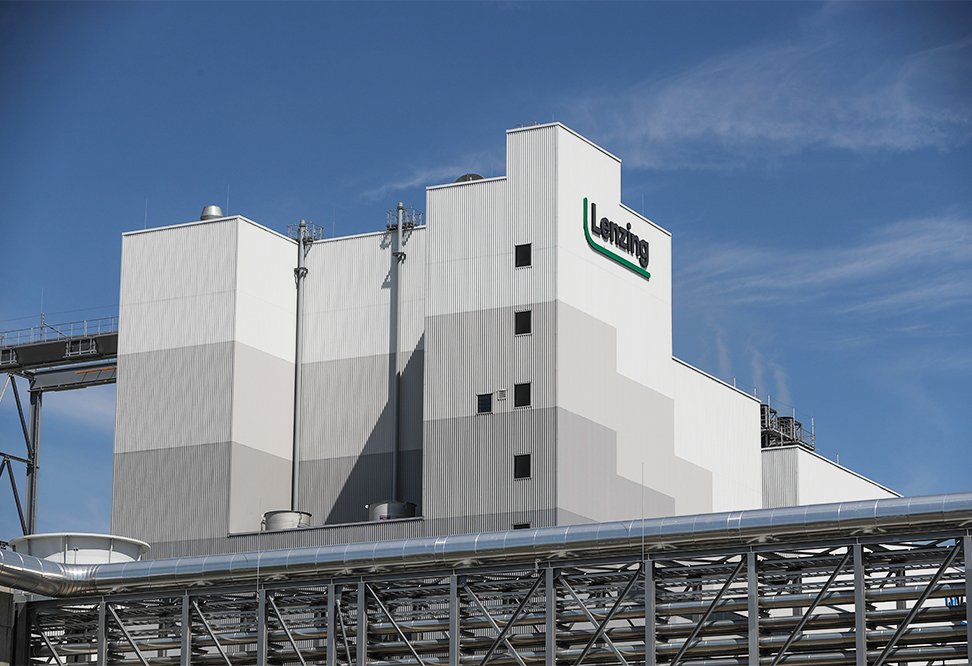
The heavily discounted equity raise will strengthen Lenzing’s balance sheet as the Austrian fibre producer closes capacity, reduces commodity exposure and redirects investment toward nonwovens and premium cellulosics.
Lenzing AG has launched a fully underwritten €300 million rights issue, providing fresh capital for its “Grow Nonwovens, Reset Textiles” strategy and a wider financial restructuring. The Austrian producer will issue 34.76 million new shares at €8.65 each, allowing shareholders to buy nine new shares for every 10 held.
The subscription price represents a 42.5% discount to the theoretical ex-rights price based on Lenzing’s September 30 closing price. Subscription runs from October 6–20, with new shares expected to begin trading on October 23.
Major shareholders provide the backstop
The B&C Group–Suzano shareholder syndicate, which controls 52.25% of Lenzing, has committed to exercise all its rights, representing about €157.1 million. Oberbank will contribute another €11.6 million. The remaining offering is underwritten by a banking consortium.
The equity injection is linked to financing agreements of up to another €300 million and extensions of existing debt maturities to 2030.
Debt drives the reset
At June 30, Lenzing carried €1.36 billion of net financial debt, against adjusted equity of €1.37 billion. First-half EBITDA was €239.2 million, while revenue weakened as the company deliberately reduced lower-margin fibre volumes.
Lenzing is responding by expanding nonwovens, concentrating textiles on differentiated premium products such as TENCEL, LENZING ECOVERO and VEOCEL, and consolidating production. Fibre manufacturing at Heiligenkreuz, Austria, is scheduled to end by December 2026 and Grimsby, UK, by end-2027, while the Indonesian viscose operation remains under strategic review.
Premiumisation becomes essential
Management ultimately targets an approximately €150 million EBITDA uplift, a 20–25% EBITDA margin and leverage below 2.5 times EBITDA.
For the wider MMCF industry, Lenzing’s restructuring is a strong market signal: expanding Asian commodity capacity is making scale alone insufficient. Future returns will increasingly depend on premium fibres, specialised nonwovens, differentiated sustainability credentials and disciplined capacity allocation.
