

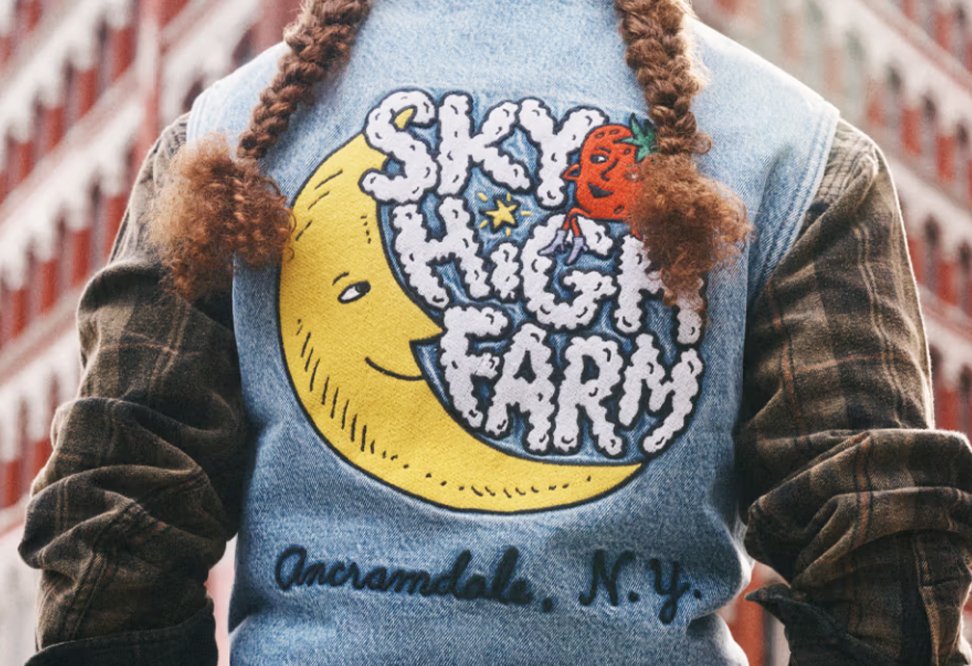
The limited-edition workwear collection uses organic and transitional cotton, turning new denim silhouettes into a commercial platform for farmers moving away from conventional cultivation.
Levi’s has partnered with Sky High Farm Goods on a purpose-led denim and workwear collection designed to support regenerative agriculture and food-equity initiatives.
Launching globally on July 25, 2026, the range combines Levi’s denim heritage with the utilitarian design language of Sky High Farm Goods, the commercial arm of New York-based nonprofit Sky High Farm. Prices span approximately $60–$225.
New silhouettes broaden the workwear offer
The collaboration introduces newly developed men’s, women’s and gender-inclusive silhouettes rather than relying solely on established Levi’s fits.
Key products include a Type III zip-front Trucker jacket, farmer’s chore coat, work vest, double-knee overalls, loose farmer jeans, straight-leg jeans and baggy utility shorts. T-shirts and a printed garden tote complete the collection. Workwear details include reinforced triple stitching, customised metal shanks, branded patches and Sky High Farm Goods’ moon-and-strawberry graphics.
The product strategy reflects wider denim demand for looser shapes, functional pockets and silhouettes that move between occupational references and everyday fashion.
Transitional cotton carries the message
The garments use organic and transitional cotton. Transitional cotton comes from farms moving from conventional production towards certified organic practices—a conversion process that typically takes three years.
During that period, farmers must stop using prohibited synthetic pesticides, fertilisers and genetically modified seed, but cannot yet sell their crop as certified organic. Brand demand for transitional fibre can therefore provide commercial support during a financially difficult stage of conversion.
Sky High Farm Goods uses fashion partnerships to fund and promote the nonprofit’s work around food access and agriculture. The collaboration gives that mission broader retail visibility while allowing Levi’s to connect material sourcing with consumer-facing design.
Purpose still requires evidence
The initiative demonstrates how denim collaborations can combine fashion, agricultural sourcing and social impact. However, neither partner disclosed production volumes, farm locations, certified fibre percentages or quantified environmental benefits.
The next test will be whether transitional cotton moves beyond limited capsules into repeat Levi’s programmes. Lasting impact will depend on long-term purchase commitments, traceable farm-level data and evidence that participating growers successfully complete the transition to certified organic production.
