

Selective dissolution offers a credible path to circularity for nylon–elastane garments.
For years, garments made from blended fibres have been the textile industry’s circularity blind spot. Without viable ways to separate components such as nylon and elastane, most swimwear, tights, and lingerie have ended their lives in landfill or incinerators. A new collaboration led by Radici InNova, with The LYCRA Company and Triumph, suggests that the barrier may finally be falling.
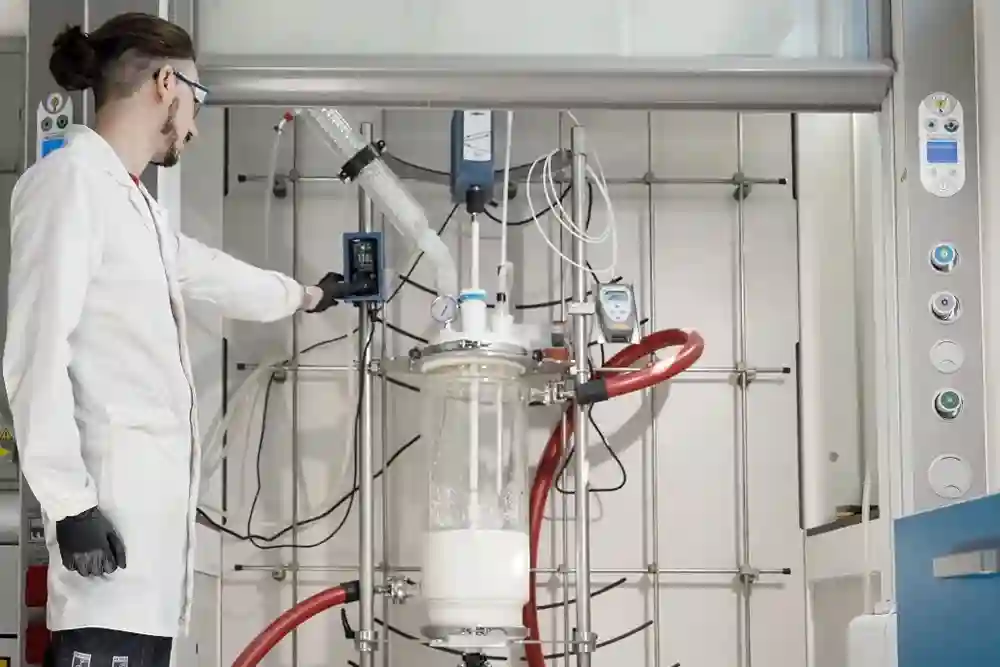
The breakthrough lies in a selective dissolution process, developed over four years and now internationally patented. Using non-toxic, non-flammable and environmentally compatible solvents, the technology can separate and recover both nylon (PA6 and PA66) and LYCRA® fibre from mixed textile waste—regardless of their proportions—while also enabling solvent recovery. That combination is what makes the process economically, not just technically, viable.
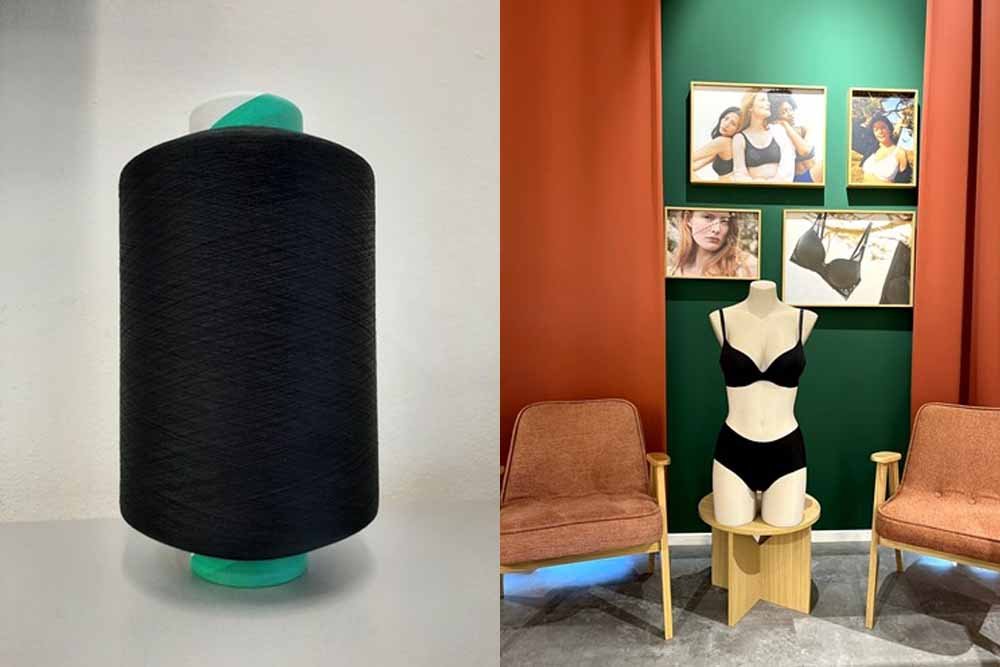
To prove feasibility beyond the lab, Triumph supplied surplus fabric containing 16% LYCRA® fibre. Radici InNova successfully recovered both components. The elastane was re-spun by The LYCRA Company, while the recycled nylon was converted into Renycle® yarn. The partners then produced a 60-metre fabric and a fully wearable, 100% recycled lingerie set, closing the loop from waste to new garment.
For the industry, the implications are substantial. Elastane has long been viewed as incompatible with circular systems; this project shows it can re-enter the spinning cycle without losing performance. Still, the result remains a prototype, not an industrial solution. Scaling, feedstock logistics and traceability systems will determine whether selective dissolution becomes mainstream.
Yet the direction is clear. Circularity in apparel will not be achieved by mono-material purity alone. If blended fabrics can be recycled at scale, one of fashion’s most persistent structural problems may finally be solvable.

