

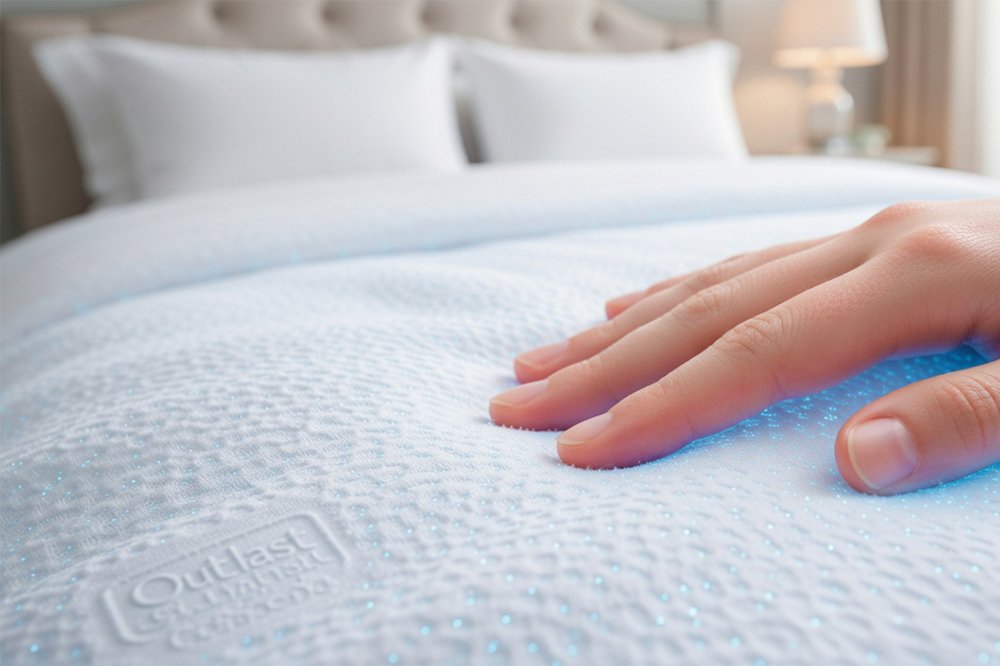
The new Lyocell-based material targets instant cool-touch comfort while combining thermoregulation, bio-based inputs and European certification credentials.
Outlast Technologies GmbH has introduced Bailey, a new cooling textile designed to deliver an immediate cool-touch effect while continuing to regulate heat over time. The company positions the material as a next-to-skin solution for applications ranging from bedding and orthopedic products to linings and other comfort-focused textile uses.
Bailey’s market proposition rests on two linked performance claims. First, Outlast says the fabric creates an instant cooling sensation through high heat absorption and strong surface effusivity. Second, it says the material continues working after first contact, with a stated heat storage capacity of 7,500 J/m², absorbing and releasing heat to help reduce temperature spikes and sweating. The construction combines the company’s temperature-regulation technology with a Lyocell-based fabric, using Lyocell’s naturally smooth, cool-touch surface as the sensory base layer.
Performance backed by material choice
The commercial logic is straightforward. Cooling claims in textiles often fade into general comfort language, but Bailey is being marketed around a tactile, immediately perceptible effect at point of contact. That gives it stronger positioning for bedding, sleep, wellness and other direct-contact categories where product feel can influence purchase decisions.
Sustainability built into the pitch
Outlast is also pushing a sustainability story alongside performance. According to the company, the Lyocell component is largely derived from renewable raw materials, while the temperature-regulating capsules use natural wax based on rapeseed oil as a renewable alternative to fossil-based inputs. Outlast also states that Lyocell-based materials can require substantially less water than cotton in production.
Bailey is manufactured in Europe and is presented with OEKO-TEX Standard 100 Class 1 and OEKO-TEX MADE IN GREEN credentials, according to product reports.
For Outlast, the opportunity is clear: turn thermoregulation from a technical specification into a visible and instantly felt product advantage.

