

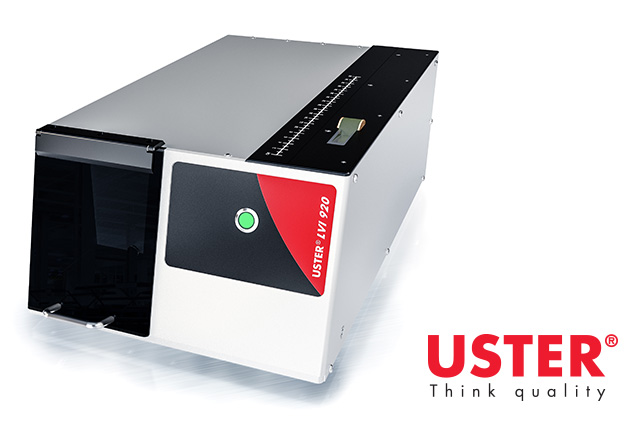
The Uster Group is a globally recognized high-technology instrument manufacturer of products for quality measurement and certification for textiles. It has recently re-launched its Low Volume Instruments (LVI) which is a specific solution for each quality need. The product is now launched with upgraded electronics and design that play an important role in the industry today, providing essential lab test solutions for companies focused on specific fibre parameters.
Nearly 70 years ago, the earliest accurate test equipment for cotton fiber properties were introduced to the market. These were the so-called Low Volume Instruments (LVI), which made an immediate market impact at the time, and which in later years were the platform for the development of the high-speed integrated system known as High Volume Instrument (HVI) testing. However, the LVI® instruments still play an important role in the industry today, providing essential lab test solutions for companies focused on specific fiber parameters, or those without the throughput needs or budget necessary for HVI®. Now, USTER has relaunched its LVI® family with upgraded electronics and design – and the accuracy and reliability as expected from USTER.
In the USA in 1948 with the ‘Fibrograph’ and the ‘Colorimeter’ two specific fiber testing instruments were launched. More than two decades later HVI® testing became available, combining measurement of fiber length, strength, micronaire, color and trash of these LVI® instruments into a single, high-throughput system, ideally suited to large-scale processors such as classing offices and major spinning mills.
Still a vital role
In this case, the advent of HVI® didn’t replace LVI® in the way that products with improved capacity often do. In fact, certain segments of the industry still depend on the LVI® series. This includes cotton traders or spinners with a lower budget, as well as those with a need for testing only specific parameters. It’s also clear that not every customer needs a measuring speed of 800 samples per hour – as provided by the USTER® HVI 1000. For many purposes, testing of one sample per minute is perfectly adequate. That’s why the USTER® LVI 930 length tester, for example, with its speed of 50 samples per hour, still has its fans.
For spinning mills with lower-cost production structures, random sampling is generally sufficient, since their customers often do not specify high yarn quality levels. Nevertheless, a certain quality level is required by such mills, and it is therefore essential to check the quality of the purchased cotton before the bale laydown. To ensure the desired quality standard is met, it is vital to check parameters such as fiber length, color/trash and micronaire, which are necessary for an effective cotton bale mix.
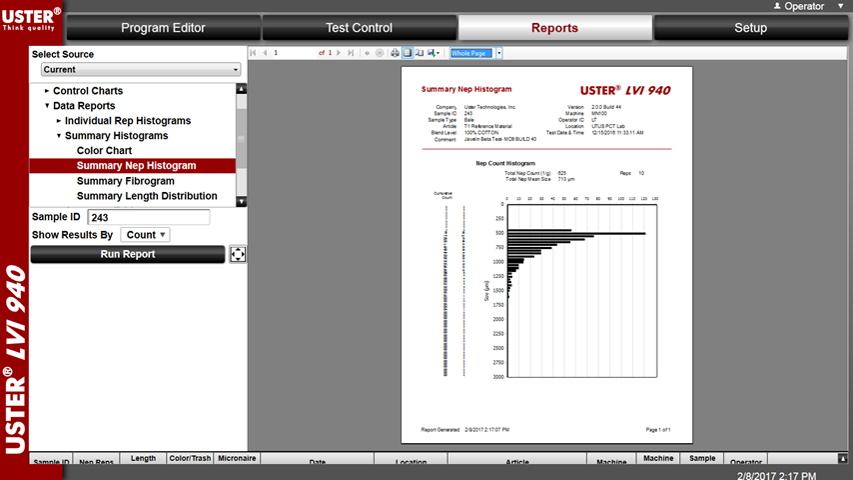
For many mills, the USTER® LVI family includes instruments which each cover a particular aspect of fiber quality, with absolute reliability: the USTER® LVI 930 length tester, the USTER® LVI 960 color/trash tester, the USTER® LVI 975 micronaire tester and the USTER® LVI 920 nep tester provide measurements describing these various cotton quality parameters, while the USTER® LVI 940 serves as the control system and data manager.
Different – but equally accurate
Even though their key characteristics can be described as “small, slow and affordable”, all LVI® instruments show the same accuracy in measurement as the flagship models – because all measurements are based on the USTER® HVI and USTER® AFIS principles. The relaunched LVI® instruments now feature refreshed electronics and an updated design. The USTER® LVI 940 introduces even more novelties, connecting the other LVI® instruments through a new software package with expanded reports, new diagnostics, calibration and data storage. “The LVIs can be easily justified as budget-friendly systems for cotton quality checks covering all basic parameters with excellent reliability,” says David McAlister, Product Manager for Fiber Testing at Uster Technologies.
The Low Volume Instruments also serve as the entry point for customers to join the USTER family at an affordable price. Starting with USTER’s unique `Think Quality´ approach, spinners are equipped to move up the profitability chain step by step with every additional instrument, towards further control of quality throughout the mill processes.
Paybacks for traders and spinners
Cotton trading companies exist in various sizes. Many are local, focusing on their domestic markets, such as in India, China, Pakistan and Bangladesh. They understand the importance of a quality tag for their trading business and therefore opt to invest in USTER® LVI. Their need isn’t comparable with that of USDA (cotton classing at the United States Department of Agriculture): at this important cotton export institution, more than 250 USTER® HVIs operate at speeds of 800 samples/hour in three shifts throughout three to four months per year.
Whether cotton is classified using LVI® or HVI® models, the important thing is that the classification takes place. Cotton marketed with no quality tag is regarded as low quality and not to be trusted – and the price suffers accordingly. The benefits of cotton classing are equally valuable to both spinners and traders. Spinners need to get the most out of their purchased raw material with a smart cotton mix. For the right decision on this, proper quality parameters are necessary. The fact that the raw material is the biggest cost factor in a spinning mill is itself justification for investment in an USTER® LVI. “Quality control always pays back,” says McAlister.

