

Denim’s next luxury phase is not about a single fit; it is about turning familiar fabric into a visibly designed, higher-value fashion proposition.
Resort 2027 collections are pushing denim further into luxury wardrobes through distressed surfaces, pieced construction and more overtly feminine silhouettes. The emerging direction moves beyond the polished, minimal jeans that dominated recent seasons, treating denim as a material for embellishment, corsetry, skirt volume and tailored contrast.
Denim enters the luxury styling equation
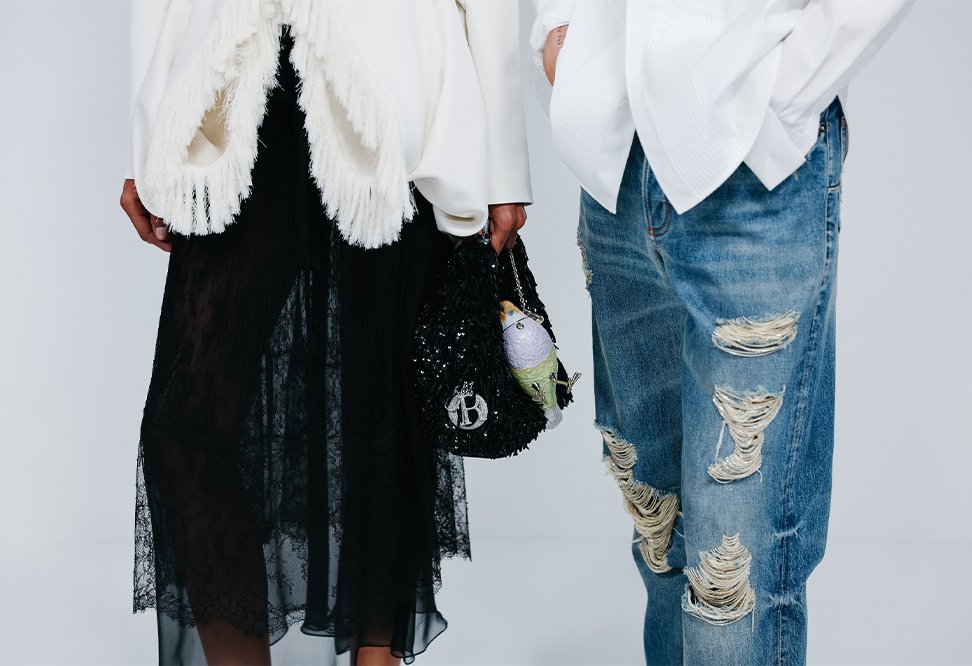
Dior offered one of the clearest signals. Jonathan Anderson paired slouchy, distressed blue jeans with the house’s structured Bar jacket, creating a deliberate collision between damaged casualwear and formal couture codes. Dior’s Cruise 2027 collection also drew on Hollywood imagery, patchwork details and embellished craftsmanship, reinforcing denim’s role as part of a broader “everyday made exceptional” proposition.
The trend is commercially important because it broadens denim’s use beyond casual separates. Instead of being limited to five-pocket jeans and basic jackets, denim is appearing in looks designed for evening, resort, occasionwear and premium fashion retail. This increases the relevance of refined fabric construction, sophisticated garment engineering and specialist surface effects.
Shape matters as much as wash
Zimmermann, where denim has become one of the brand’s faster-growing categories, used corseted tops, dramatic skirts and highly designed pieces to expand the fabric into a more feminine product architecture.
The silhouette story remains deliberately broad. Straight-leg styles retain relevance, while wide-leg and low, loose proportions continue to hold fashion momentum. At the same time, slimmer cigarette cuts, trouser-inspired denim and floor-skimming volumes are all visible in the market, making fit flexibility more valuable than a single-volume bet.
The mill and laundry brief
For mills and garment laundries, Resort 2027 points to four practical development priorities: authentic but controlled distressing; pieced or patchworked constructions; lighter and more adaptable fabrics for fashion silhouettes; and surface embellishment that does not compromise durability or repeatability.
The strongest commercial opportunity lies in denim programmes that combine vintage character with premium execution. Mills will need fabrics that can withstand abrasions, laser work, hand-finishing, embroidery, metallic trims and more complex cut-and-sew assembly without excessive skew, seam distortion or shade inconsistency.
The next buying season should show whether luxury houses translate these runway experiments into scalable commercial capsules. But the direction is clear: denim is becoming more decorative, more engineered and more central to elevated womenswear.
