

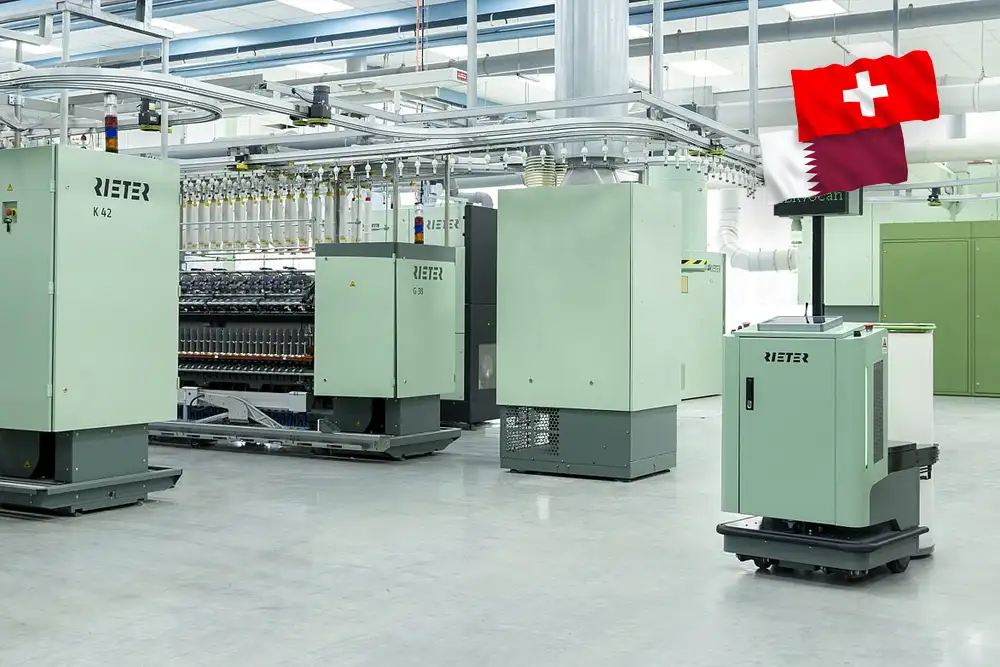
Recycling Powerhouse will combine automated sorting, fabric preparation, tearing, spinning and traceability in standardised plants, with its first reference facility due in Qatar in early 2027.
Rieter, Säntis Textiles and Belgium’s Valvan have backed a new Swiss venture designed to industrialise textile-to-textile recycling through a franchise-based global network.
Recycling Powerhouse Ltd., established in July 2026, will provide investors and operators with standardised plant concepts, machinery, operating procedures, training, digital systems, auditing and technical support. Franchise plants will convert pre- and post-consumer textile waste into certified recycled yarns marketed under a common brand.
One system connects the recycling chain
The venture addresses a central weakness in textile recycling: sorting, preparation, fibre recovery and yarn production are often managed by separate companies with inconsistent data and quality controls.
Valvan will contribute its AI-enabled Fibersort technology, which separates textiles by fibre composition and colour, and Trimclean equipment for removing unwanted components and preparing fabric clips. Rieter will provide tearing and short-staple spinning expertise, while Säntis Textiles will contribute recycling engineering and yarn-development knowledge.
Rieter says its tearing technology preserves fibre quality more effectively than conventional systems. This is commercially important because mechanical recycling shortens and damages fibres, limiting yarn strength, spinning stability and recycled-content levels.
Qatar becomes the blueprint
The first franchise operation is scheduled to begin production in early 2027 with Suhail Industrial Holding Group in Qatar. The facility will serve as the reference model for subsequent plants, while Suhail is already considering additional international locations.
The franchise model could shorten project-development time by offering a repeatable technical and commercial package. It may also improve buyer confidence through common audit rules, certification and end-to-end traceability.
Standardisation faces a difficult feedstock test
The venture cites the widely reported estimate that less than 1% of used textiles are recycled into new textile products. Scaling remains difficult because waste streams vary in fibre blends, colour, contamination, trims and fabric construction, while virgin materials often remain cheaper.
No plant capacity, investment value, yarn specifications or target recycled-content levels were disclosed. The Qatar facility will therefore be the critical test of whether a standardised franchise can manage variable waste inputs while delivering consistent yarn quality, competitive costs and credible traceability at industrial scale.
