

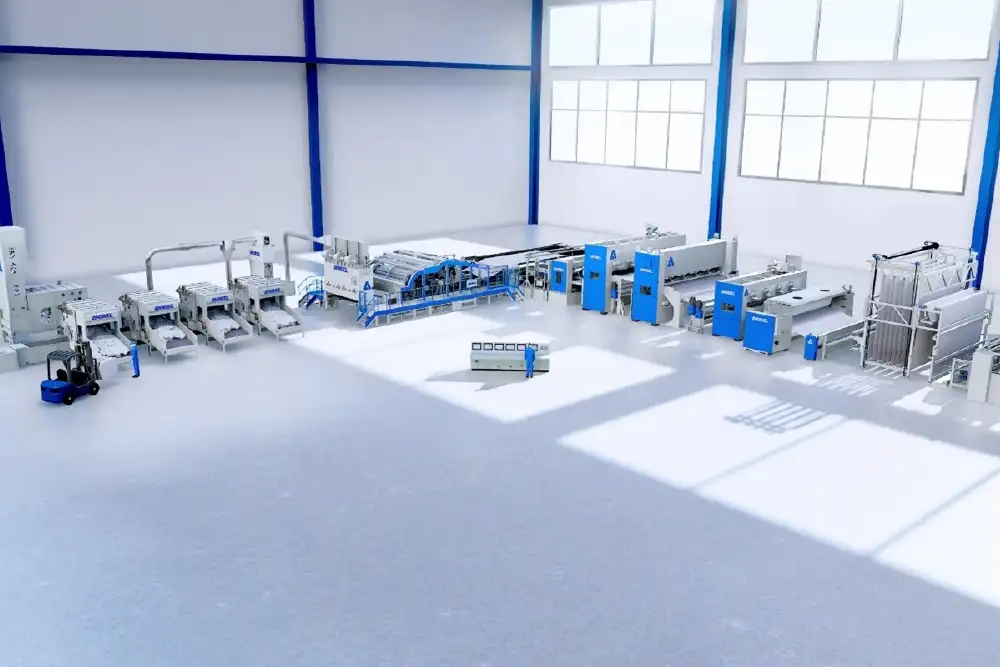
The integrated platform combines decortication, refining, cottonisation and web formation, targeting industrial use of hemp, flax, jute and other plant fibres.
ANDRITZ has expanded its proposition for bast-fibre processing with an integrated production route covering raw-straw preparation through to carded or airlaid webs.
The company’s teXline platform combines dry cleaning, decortication and refining, with optional cottonisation for applications requiring shorter, more textile-compatible fibres. Downstream systems can then convert the prepared material into nonwovens for automotive, construction, geotextile, insulation, hygiene and other technical applications.
From bale to controlled fibre
The system can process hemp, flax, jute and other bast straws in either rectangular cut bales or round uncut bales. ANDRITZ recommends controlled raw-material moisture of approximately 12–16%, depending on fibre type, to support stable separation and preserve fibre integrity.
For a typical hemp line, the company reports outputs of roughly 50% cleaned shives, 25% cleaned refined fibre, 15–20% dust and around 5% very short fibres. These figures illustrate the importance of co-product management: investment economics depend not only on saleable textile fibre, but also on finding outlets for shives, fines and dust.
Capacity scales with the market
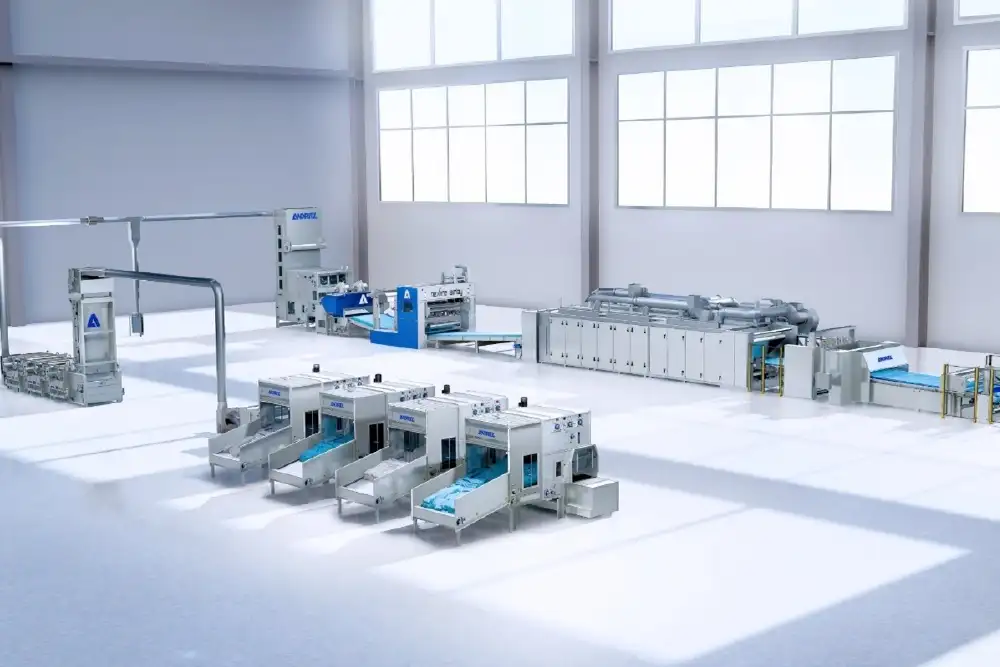
Modular lines can begin at about one tonne per hour and expand to 2.5 tonnes per hour. Standard industrial configurations are available for 2.5, five and ten tonnes of straw throughput per hour.
Cottonisation capacity ranges from approximately 0.1 to one tonne per hour. The process reduces fibre length and residual shive content, enabling bast fibres to enter spinning blends, nonwovens, hygiene products and speciality textile applications more consistently.
ANDRITZ also operates technical centres in France where customers can test decortication, refining, airlay and carding before committing to commercial equipment.
Integration lowers processing risk
Two European manufacturers have selected integrated ANDRITZ systems to process hemp from agricultural feedstock through to geotextile roll goods, with production scheduled to start in 2027.
The commercial test will be whether these lines can maintain consistent fibre quality despite variations in crop, retting, moisture and contamination. For bast fibres to move beyond niche sustainability projects, processors must achieve dependable yield, machine utilisation and product performance at costs competitive with established natural and synthetic fibres.
