

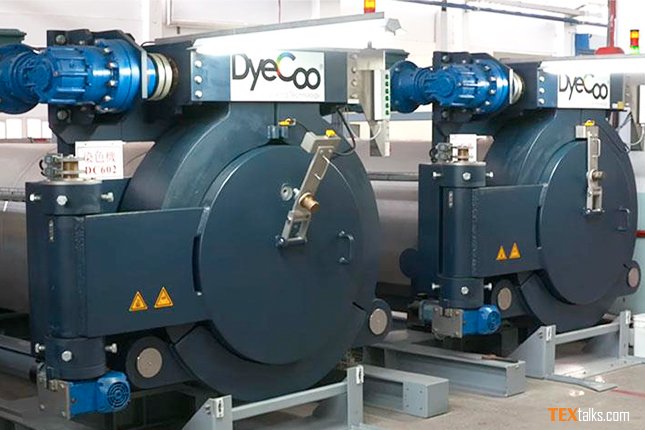
Due to the environmental concerns, the ZDHC campaign leading the way to zero discharge and shift to water-less dyeing methods using supercritical carbon dioxide, the global demand for supercritical carbon dioxide (SC-CO2) dyeing is increasing. So far, the dyeing effect and controlling or predicting the final shade with SC-CO2 was not possible for successful commercialization. However, it is important to predict the dyeing effect of supercritical carbon dioxide precisely.
In this regard, researchers have successfully reported the utilization of statistical models that can effectively and accurately predict the dyeing effects in SC-CO2 dyeing methods.
Supercritical carbon dioxide dyeing is anhydrous dyeing.
This process comprises the usage of less energy and chemicals compared to conventional water dyeing processes leading to a potential of up to 50% lower operating costs. The advantages of the supercritical carbon dioxide dyeing method, especially on synthetic fiber fabrics, hearten leading textile companies to alter their dyeing method to this privileged waterless dyeing technology. Supercritical carbon dioxide (scCO2) waterless dyeing is a widely known and applied green method for the sustainable and eco-friendly textile industry.
Researchers have used Generalized Regression Neural Network (GRNN), and Back Propagation Neural Network (BPNN) models have been employed to predict the dyeing effect of SC-CO2. These two models have been constructed based on published experimental data and calculated values.
A total of 386 experimental data sets were used in the present work.
The results demonstrate that both BPNN and GPNN models can accurately predict the effect of supercritical dyeing but the former is better than the latter.

