

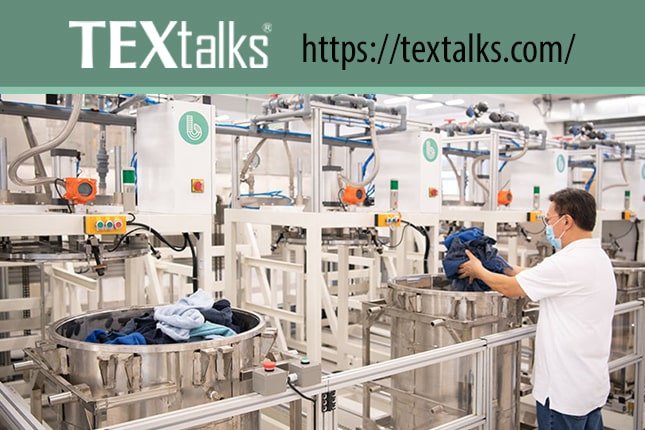
The Billie System is an innovative waterless system that strives to provide a meaningful impact to one of the biggest problems for the fashion and garment industry – textile waste.
Billie’s uniqueness is that it uses automation, color sorting, and robotics to separate the materials in the front end, said Keh.
The colors of the final products are blended with existing materials, unlike conventional methods that need dying and reprocessing, which generate wastewater and chemicals.
The Billie system, a patented “upcycling” process that can break down textile waste into slivers for blending with new threads before they are spun into yarn for reuse, all done without using water or hazardous chemicals.
The process, co-developed with the Hong Kong Research Institute of Textiles and Apparel (HKRITA) with HK$15 million (US$1.9 million) in investment, was named “Billie” in honor of Chao’s grandfather Billy, who passed away in March, aged 101.
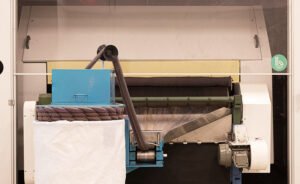 Developed by Novetex Textiles Limited, the patented system is almost entirely automated, reducing the high labor costs associated with textile recycling. Billie can process up to three tonnes of recycled fibers per day, blended with virgin materials to produce yarn for various textile products in Novetex’s spinning mill in Zhuhai. That is enough to make 5,000 to 8,000 scarves if 50 % virgin material is blended into upcycled yarn, depending on the design and type of textiles recycled.
The system involves a six-step process; the steps are:
1. Textile Waste Sanitization
2. Hardware Removal
3. Automatic Colour Sorting
4. Fibre Processing
5. Uv Light Sanitisation
6. Sliver Processing

