

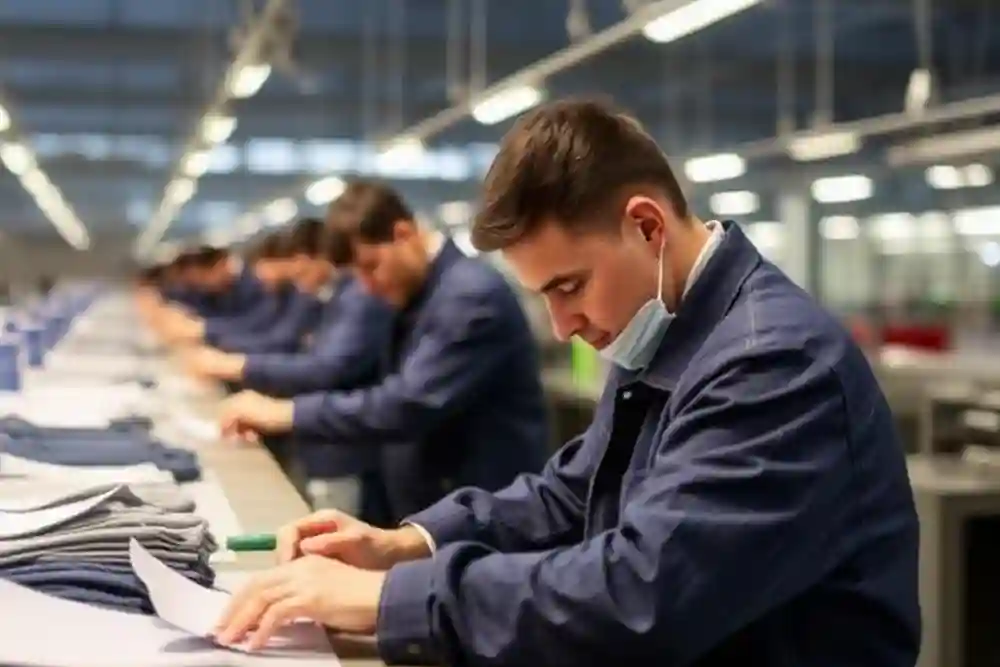
As of January 1, Turkey implemented a 27% minimum wage increase, raising the monthly minimum wage to 33,030 Turkish lira (≈ $769). According to İTHİB Chairman Ahmet Öksüz, the true cost to manufacturers approaches $1,000 per worker per month once food, transport, taxes and benefits are included.
This places Turkey among the higher-cost sourcing destinations globally, accelerating an already ongoing shift in its denim sector away from volume-driven basics toward higher-value, specialized and technically advanced production.
Industry Response: Strategy Over Retrenchment
Rather than layoffs or aggressive restructuring, leading Turkish denim players are responding with efficiency, innovation and differentiation.
- Calik Denim
Acting General Manager Ibrahim Ethem Buyukpepe emphasized that wage pressure is being managed through process optimization, smart manufacturing, and long-term partnerships, not short-term price hikes or downsizing.
“Rising wages are part of a broader cost environment. Turkey’s resilience lies in its integrated supply chain, speed-to-market, technical expertise and sustainability know-how.”
- Denimtek Tekstil
Founder Levent Korkmazer noted that the impact will be felt more in indirect production costs across the supply chain rather than payroll alone. Historically, he said, inflationary adjustments and currency movements tend to normalize the real impact within months.
Competitive Positioning: Premium Over Price
The wage hike adds to other pressures—energy costs, raw material volatility, softer global demand, and tighter regulations—but it also reinforces Turkey’s role as a premium denim hub rather than a low-cost producer.
- Turkey continues to outperform lower-cost competitors like Egypt and North Africa in:
- Quality consistency
- Complex, value-added products
- Speed, flexibility and execution reliability
As Korkmazer put it: “Low-quality production being cheap has no real meaning for brands.”
Regulation and Digital Transition
Beyond wages, Turkish suppliers are navigating Digital Product Passports (DPP), the Green Claims Directive, CSRD, and CSDDD. To support suppliers, IHKIB, with backing from ISTKA, has launched the “Twin Transition in the Apparel Supply Chain” initiative.
The 12-month program supports:
- Digital and sustainability maturity assessments
- Transformation roadmaps and mentoring
- Traceability, low-carbon production and reporting readiness
- Access to EU and national funding mechanisms
Bottom Line
Turkey’s 27% minimum wage increase is not triggering an industry retreat, but rather accelerating a strategic evolution. Turkish denim is leaning harder into innovation, sustainability, smart manufacturing and premium value creation, reinforcing its position as a solution-oriented, high-quality sourcing partner for global brands.
In a slower, more regulated market, Turkey is betting that resilience and differentiation will outperform cheap labor—and early signals suggest the strategy is holding.

