

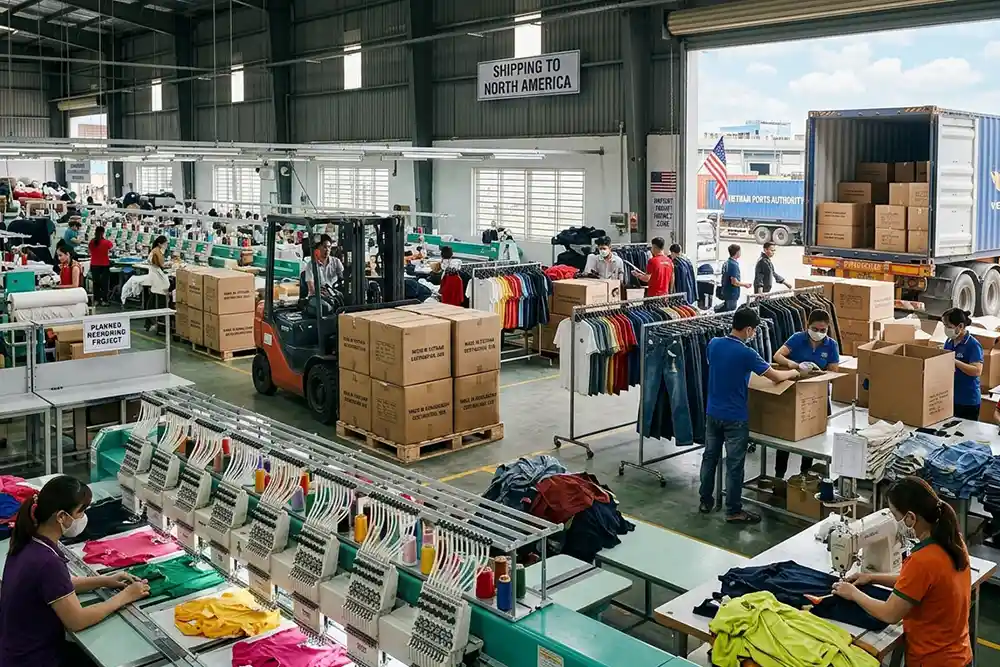
Only 10% of surveyed US fashion companies increased “Made in USA” sourcing in response to higher tariffs, while brands are instead diversifying, consolidating suppliers and pushing deeper into nearshoring.
Higher US tariffs are disrupting apparel supply chains but have produced little evidence of large-scale manufacturing reshoring, according to the 2026 USFIA Fashion Industry Benchmarking Study. Only 10% of respondents identified increased sourcing of “Made in USA” products as a strategy for dealing with tariff increases.
The study, conducted with the University of Delaware, surveyed executives from 30 leading US fashion companies between April and June 2026. Around 80% of participating companies employ more than 1,000 people.
Tariffs hit margins, not import dependence
The financial effects are becoming more pronounced. 85% of respondents said tariff increases had hurt company financial performance, up from 78% in 2025, while 74% reported higher sourcing costs. More than half said tariffs were also reducing resources available for areas such as sustainability and product innovation.
Protectionist US trade policies and tariff uncertainty remain the sector’s biggest concern: 92% ranked the issue among their top two business challenges in 2026.
Instead of reshoring, companies are using tariff refunds, first-sale valuation, supplier renegotiations and sourcing diversification to manage costs.
Nearshoring gains—but Asia remains central
Domestic sourcing has increased: 56% of respondents sourced some apparel from the United States in 2026, versus 40% in 2025. Yet US-made products still represented less than 10% of procurement volume or value for those companies, indicating diversification rather than import substitution.
The Western Hemisphere is gaining more traction. 76% sourced from CAFTA-DR countries, up from 64% in 2025, while 24% sourced more than 10% of their apparel there.
Suppliers face a different competitive test
US brands now source from 49 countries, up from 46, but the next phase is shifting from adding vendors toward supplier consolidation, strategic partnerships, traceability and resilience.
For Asian exporters, that is crucial. Tariffs may alter sourcing shares, but competitiveness will increasingly depend on flexibility, compliance, speed, vertical integration and the ability to become a strategic supplier—not simply on offering the lowest FOB price.
