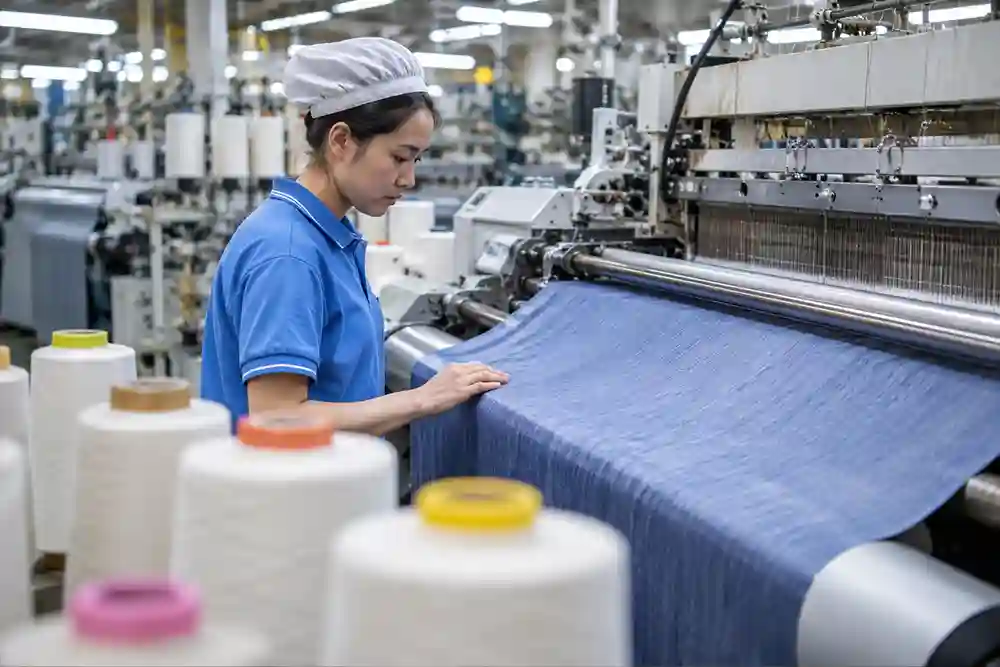
Vietnam’s textile and apparel exports to CPTPP markets have reached $8.3 billion, but strict yarn-forward rules and insufficient domestic fabric production are preventing manufacturers from fully exploiting preferential tariffs.
Vietnam’s textile and garment industry is struggling to maximise the benefits of the Comprehensive and Progressive Agreement for Trans-Pacific Partnership (CPTPP) because domestic fabric production meets only 36% of industry requirements.
Although exports to CPTPP markets increased from $6.27 billion in 2018 to $8.3 billion in 2025, industry representatives say inadequate weaving, dyeing and finishing capacity continues to constrain preferential market access.
$11.6 Billion Fabric Import Dependence
Vietnam imported approximately $11.6 billion worth of fabrics during January–September 2026, compared with $15.2 billion throughout 2025.
Domestic manufacturers supply only around 50% of the industry’s overall material and accessory requirements.
Meanwhile, imports of textile materials and accessories from CPTPP partners remained virtually unchanged at $1.58–1.59 billion annually between 2018 and 2025.
According to the Vietnam Textile and Apparel Association (VITAS), fewer than 10% of exports reportedly use preferential CPTPP certificates of origin, despite increasing fourfold since implementation.
Yarn-Forward Rules Create Manufacturing Bottlenecks
Under the CPTPP’s general yarn-forward rule, qualifying garments must undergo spinning, fabric formation and subsequent manufacturing within member countries, subject to product-specific exceptions.
The agreement includes a short-supply list allowing specified non-originating materials.
Vietnam’s substantial reliance on imported fabrics complicates compliance, particularly when materials originate outside the CPTPP.
Manufacturers Restructure Supply Chains
TNG Investment and Trading JSC has responded by reassessing suppliers, developing partnerships with domestic fabric manufacturers and implementing digital origin-tracking systems.
Its platform connects material consignments with QR codes, ERP records, invoices and supporting documentation.
Vietnamese officials are encouraging additional investment in weaving, dyeing and finishing, including joint ventures with foreign manufacturers establishing production inside Vietnam.
Such investments could expand qualifying regional supply chains and support higher-value garment manufacturing.
The next challenge is converting tariff preferences into manufacturing investment, reliable origin documentation and greater domestic fabric availability, enabling Vietnamese exporters to capture more value from CPTPP markets.