

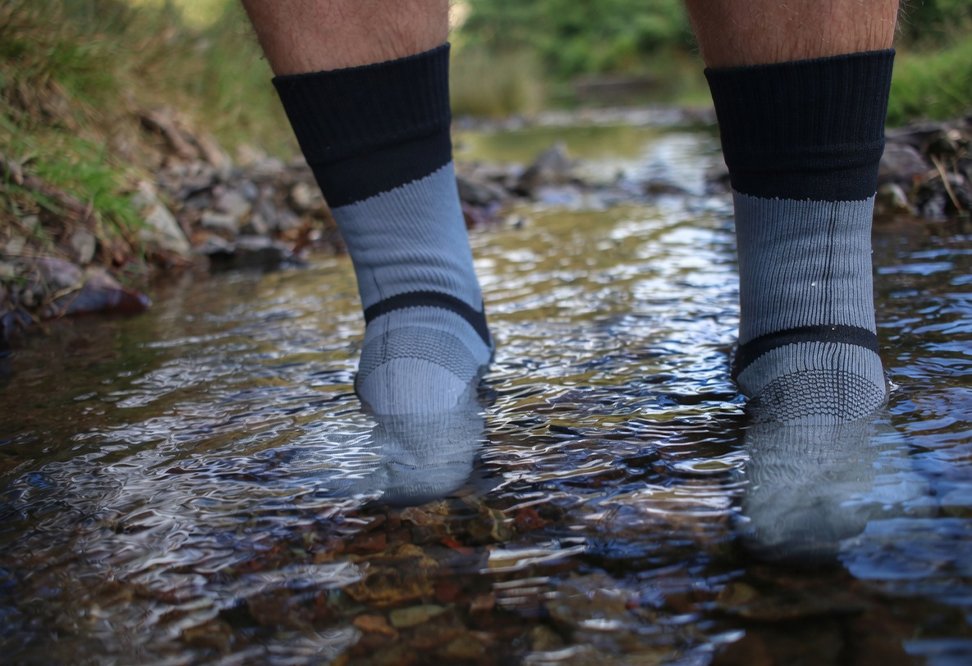
Growth is being driven less by fashion novelty and more by functional demand from hikers, cyclists, anglers and winter-sport consumers.
The global waterproof socks market is projected to expand from $37.3 million in 2026 to $50.8 million by 2033, reflecting a 4.5% CAGR, according to Persistence Market Research data cited in recent market coverage. The category remains niche within performance apparel, but its growth reflects a broader shift toward protective, weather-resistant and activity-specific textile accessories.
Functional apparel moves downstream
Waterproof socks are designed to prevent water penetration while maintaining breathability, typically through membrane-based constructions combined with durable outer yarns and moisture-managing inner layers. Their appeal is strongest in hiking, trekking, cycling, fishing, trail running, camping and winter sports, where wet feet can quickly affect comfort, safety and performance.
This positions waterproof socks between hosiery, outdoor footwear accessories and technical apparel. For textile manufacturers, the opportunity lies not in volume alone, but in higher-value engineering: lamination, seam integrity, stretch recovery, abrasion resistance, thermal comfort and wash durability.
Outdoor users drive demand
Outdoor sports and adventure users remain the dominant demand segment, supported by harsher terrain exposure and growing consumer willingness to pay for specialized gear. The market is also benefiting from lifestyle changes, including more recreational travel, fitness-oriented outdoor activity and increased awareness of safety equipment.
North America leads the market, supported by a mature outdoor culture, strong participation in hiking and camping, and the presence of established outdoor apparel and gear brands.
A small market with premium logic
For mills and brands, waterproof socks are not a commodity sock category. They require technical material selection, precise construction and credible performance claims. This creates opportunities for suppliers with expertise in synthetic yarns, merino blends, membrane bonding and testing-backed product development.
However, the category also faces constraints. Waterproofness, breathability and comfort are difficult to balance, and consumers are increasingly sensitive to durability, odour control, sustainability and price.
The next phase of growth will depend on whether brands can make waterproof socks lighter, more breathable and more affordable without compromising protection. For textile innovators, the market’s modest size is less important than its premium positioning within the expanding outdoor-performance apparel economy.
