

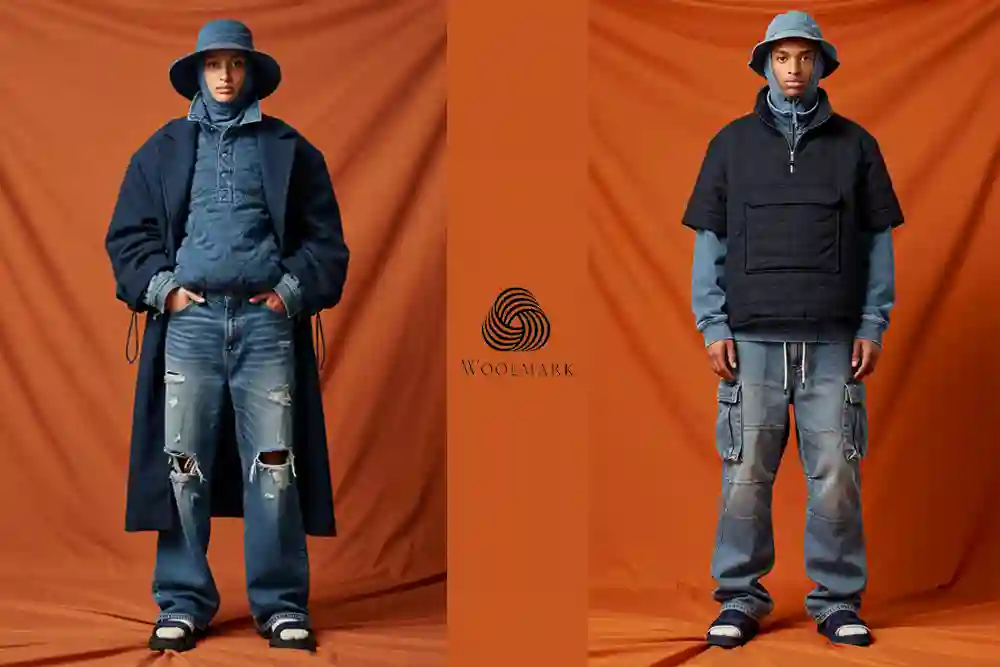
Wool denim is gaining traction as a premium, high-performance alternative—backed by new tools, new technologies, and a shifting mindset across the supply chain.
Wool is quietly reshaping the future of denim. No longer confined to winter wear or luxury knitwear, Merino wool is emerging as a high-performance ingredient in next-generation denim—and The Woolmark Company is moving to accelerate that shift.
In May, Woolmark released The Wool Lab Denim Edition, a comprehensive digital sourcing guide that gives mills, brands and designers a technical roadmap for working with wool in denim. The guide covers seven categories—from The Denim Suit to Denim-Inspired Knits—and is supported by a detailed toolkit offering guidance on fibre selection, construction, finishing and sustainability.
This effort responds to surging demand from industry players exploring wool denim. Mills are seeking premium differentiation through hybrid yarns and lower-impact dyeing processes, while brands are looking for natural-fibre alternatives that meet performance and sustainability targets. From shirting to indigo knitwear, Woolmark reports that swatch requests for wool denim have risen sharply.
Wool denim sits at the intersection of several macro-trends: the blurring of smart and casual apparel, consumer demand for comfort, and the search for more sustainable, higher-value materials. Merino wool adds natural stretch, breathability, thermoregulation and odor resistance—attributes that resonate with performance-driven and climate-conscious consumers.
New processing innovations are also dismantling old constraints. Techniques such as the Sara Process, Huilai Biotechnology’s cold-dye methods, and COLOURizd’s pigment-infusion technology minimize water and chemical use while preserving wool’s integrity. This allows mills to achieve denim aesthetics—from high-contrast fades to textured indigo effects—without traditional, wool-damaging treatments.
Premium mills are already moving. Pioneer Denim in Bangladesh and Berto in Italy are expanding their wool denim portfolios, sourcing Merino fibres in the 17.5–22 micron range and developing blends from 60/40 cotton-wool to 100 percent Merino wefts. Their customers value not only the tangible qualities—softness, warmth, drape—but also the novelty and exclusivity of wool denim.
Woolmark’s Denim Edition positions wool as a credible, scalable alternative in a category traditionally dominated by cotton. The next phase will depend on three factors: lowering cost barriers through wider industrial adoption, equipping mills with the technical know-how to handle wool’s delicate behavior during dyeing and finishing, and building consumer awareness that wool denim is not high-maintenance nor seasonal.
As new blends and processing techniques mature—and as brands seek sustainable premiumisation—wool denim is poised to shift from niche experiments to mainstream material strategy. In the evolving hierarchy of fibres, wool’s value proposition is no longer a secret. It is becoming a differentiator.

