

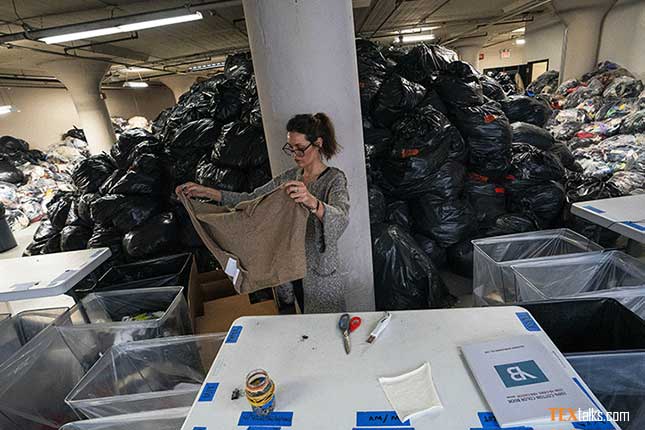
Fabscrap is a non-profit organization dedicated to recycling and reusing textiles that are unsuitable for donation.
Every day, 3,000 pounds (some 1,350 kilos) of scraps arrives at the warehouse.
The organization has established partnerships with about 250 ready-to-wear brands. Last year, Fabscrap picked up a total of 150,000 pounds of fabric.
Fabscrap offers its clients annual data about how much of their fabric waste is actually recycled or reused, and calculates their carbon footprint savings.
Volunteers do most of the fabric sorting — for every three hours of work, they can take home five pounds of scraps and buy more at a lower rate than is offered to fashion students, artists and do-it-yourself seamstresses.
Tiny scraps are sent to a shredder for later reuse in home insulation materials, as filling for pillows, or in blankets used by moving companies.
Bits of Lycra or Spandex, which cannot be shredded, are used to fill punching bags for boxing gyms.
In all, 54% of the fabric collected is recycled, another 41% is resold and 5% ends up in the landfill — the worst option, for the self-proclaimed “trash nerds” at Fabscrap.
Fabscrap was born out of Schreiber’s inability to effect as much change working on recycling and sustainability.
She was in charge of recycling 200,000 tons of clothes, shoes and household linens wasted by New Yorkers each year.
Ms Jessica Schreiber says, “If we didn’t exist, a lot of this would be landfill and only a small fraction would be reused.”
