

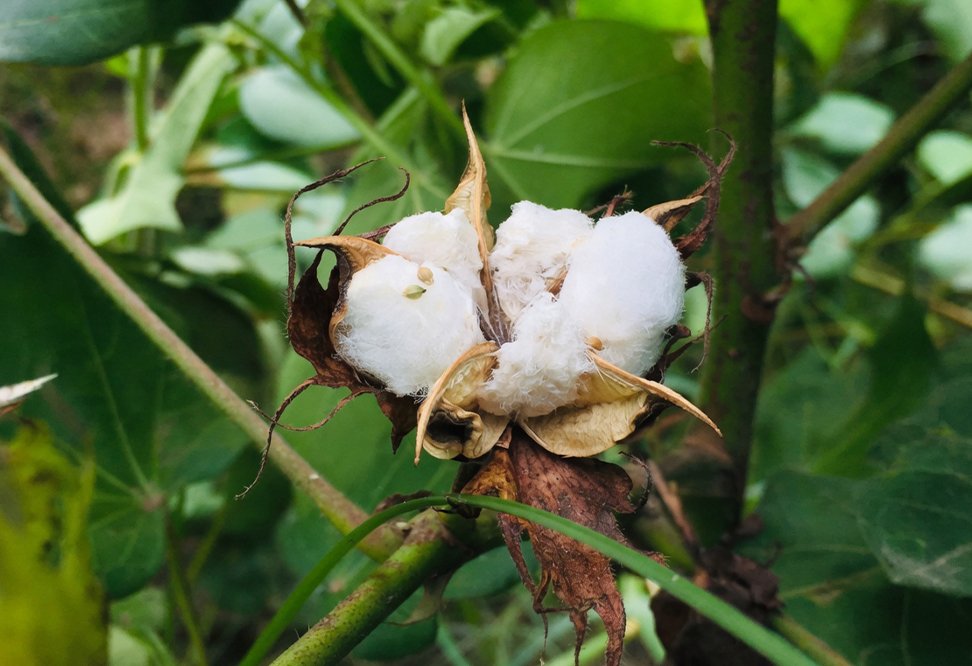
The three-year initiative moves cotton sustainability from farm-level compliance toward landscape restoration, water productivity and farmer resilience.
Levi Strauss & Co. has launched a regenerative cotton initiative in Pakistan, targeting one of the country’s most important cotton-growing areas as brands seek more resilient and traceable raw-material supply chains. The Levi’s Regenerative and Resilient Landscape Initiative began in January 2026 in Jalalpur Pirwala, in Punjab’s Multan district, and will run for three years across 10,000 hectares of agricultural land.
A landscape, not just a farm programme
The project is funded by Levi Strauss and implemented through a programme initiated by WWF-Pakistan, with support from the Laudes Foundation. It forms part of the wider Regenerative Production Landscape Collaborative, which spans cotton-producing regions in Brazil, India, Pakistan and Tanzania and covers one million hectares under multi-stakeholder partnerships.
What makes the Pakistan initiative commercially important is its “mini-landscape” model. Rather than treating farms as isolated production units, the programme links cotton cultivation with water systems, biodiversity, soil health and farming communities. That approach reflects a wider shift in apparel sourcing: buyers increasingly want evidence that raw materials are produced in systems capable of withstanding water stress, soil degradation and climate volatility.
Early field activity
Levi Strauss said the programme had already engaged nearly 600 farmers through community meetings and awareness sessions by March 2026. It had also established 20 farmer field schools, with 165 farmers completing training on soil health and water conservation. In addition, 100 soil samples have been collected to establish baselines for future measurement.
By December 2028, the initiative aims to improve water productivity, reduce reliance on synthetic fertilisers and pesticides, increase soil organic matter and plant 100,000 trees to enhance biodiversity and capture carbon.
Why Pakistan matters
Pakistan is strategically relevant for denim and cotton sourcing, but its cotton economy faces persistent pressure from water scarcity, input costs, declining soil health and weather instability. For Levi’s, the initiative supports its 2030 water strategy and helps protect a key raw-material base. For Pakistan’s textile sector, it offers a chance to strengthen its position in a market where buyers are asking for traceability, lower-impact fibres and credible farm-level evidence.
The next test will be measurement. If the project can show verified gains in water productivity, soil health, input reduction and farmer income, it could become a model for scaling regenerative cotton across Pakistan’s export-linked textile supply chain.
