

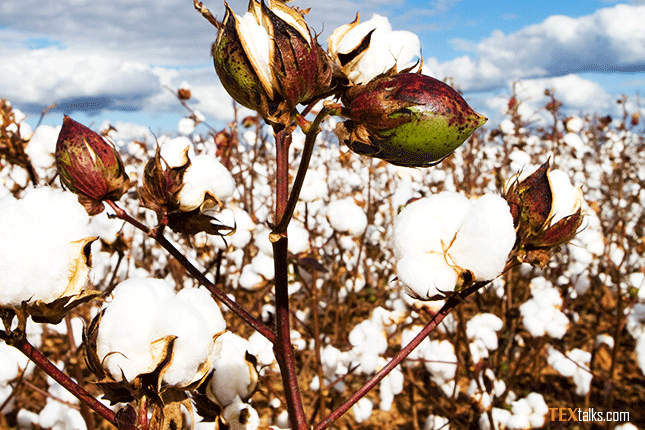
H&M has revealed that 97% of its cotton came from sustainable sources in 2019, as it moved one step closer to achieving 100% sustainable cotton.
By 2023, the company wants 100% of its materials to be either recycled or sourced in a more sustainable way. This is according to H&M’s 2019 Sustainability Performance Report, recently released to highlight some of the retailer’s achievements last year.
H&M also explored new circular business models with the launch of on-demand, customization, repair and rental initiatives. The new sustainable materials were introduced, such as the cellulosic fibre made by Infinited Fiber Company from recycled cotton textiles and Renewcell’s ground-breaking Circulose.
There were also efforts to provide more transparency, with the brand disclosing viscose and other man-made cellulosic fibre suppliers. And 100% of H&M’s textile and leather supply chain are now enrolled in the Zero Discharge of Hazardous Chemicals programme, which tackles the issue of hazardous chemicals in the global textile industry.
One of H&M’s latest initiatives is Treadler, a B2B service for external textile and apparel retailers announced in March. Initially working on a small scale, the service will give companies access to H&M’s global supply chain to help them overcome initial business barriers and accelerate sustainable change. “I am proud of all the progress we made in 2019. Looking ahead, not only our industry will continue changing rapidly, but also the world as a whole. 2020 has started with a challenge we never saw before with the spread of Covid-19 affecting the whole world, companies and societies. I am confident that the long-term vision we always had, and will continue having, on sustainability will play an – even more – crucial role in facing these challenges,” said Anna Gedda, head of Sustainability H&M Group.
