

The shortage of masks and personal protection equipment France experienced at the onset of the COVID-19 outbreak may well turn out to have a silver lining as the country faces a prolonged economic crisis: Its ailing textile industry is finding a second wind.
With borders closed, the French textile industry rallied to fulfill needs. The Savoir-Faire Ensemble (a play on the French words for know-how and working together) group grew from a dozen to some 1,500 companies, from fabric mills to garment manufacturers, pooling their knowledge and resources to create a whole PPE production chain from scratch.
In the historic garment region of Roubaix, northern France, Carol Girod and Christophe Lépine, a brand strategist and a veteran of “Made in France” production who previously founded workwear brand Bleu de Paname, cofounded Résilience, a sustainable and inclusive textile coalition that produced reusable masks through a network of partner workshops.
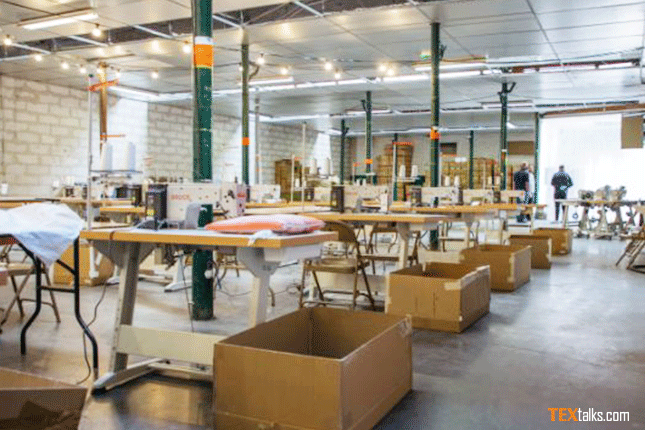
In early May, Résilience opened R3, a 130-machine workshop, with a mix of public and private funds. The factory hired more than 200 workers with the support of a social outreach program designed by Stéphanie Calvino, the founder of the Anti Fashion Project, an open platform dedicated to the renewal of fashion inspired by Li Edelkort’s eponymous 2015 manifesto.
Two more ateliers are planned for the fall. “Made in France only makes sense with socially responsible projects like this, in places where the skills already exist,” Calvino said.
“But I wouldn’t deprive a project of exceptional craftsmanship just because it means there’s a border crossing. The keys are transparency, benevolence.”
Guillaume Gibault, Founder of French-manufactured apparel brand Le Slip Français, was among the early participants in Savoir-Faire Ensemble.
“In this crisis lies the opportunity to invent the future of our business,” he said. “The post-COVID-19 challenge is to apply the same approach, which means setting out precise requirements for consumer products and finding French workshops that can meet them.”
All this suggests that the French textile sector, widely written off as defunct, could play an important role in the French government’s economic recovery plan, to be presented next September.
Second only to the food industry, the textile and clothing sector generated direct turnover of 154 billion euros in 2018 and directly employed more than half a million people, according to data published by the Institut Français de la Mode.
The French government has tasked Guillaume de Seynes, Executive Vice-President of Hermès International, to set out a roadmap for the future of the industry based on sustainable development and relocating production in France.
