

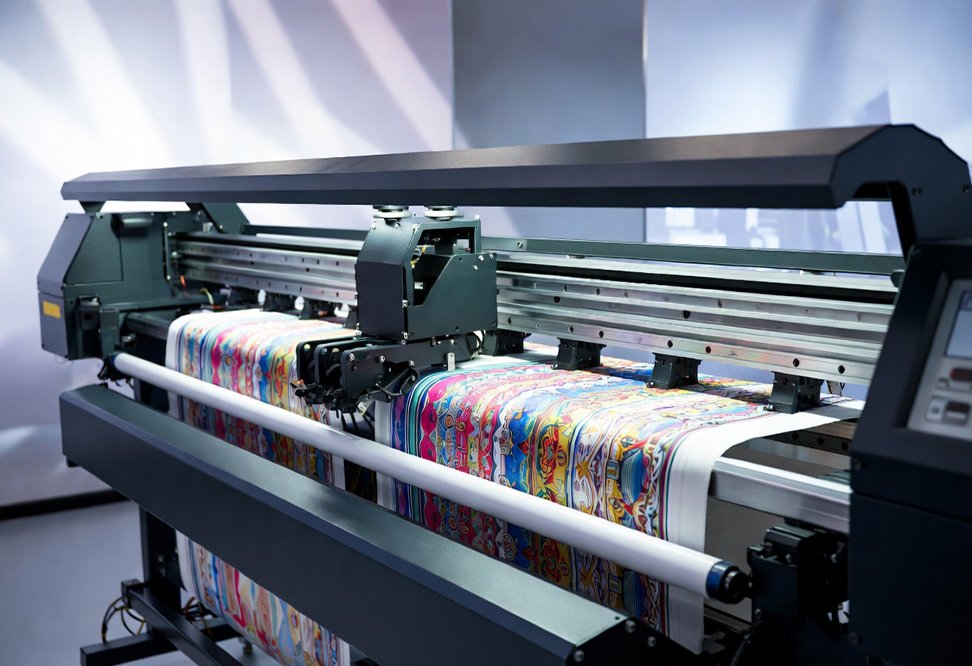
Demand-responsive production, sustainability compliance and software-linked workflows are turning digital textile printers from specialist machines into core manufacturing infrastructure.
The global digital textile printer market is projected to grow from $3.8 billion in 2025 to $7.2 billion by 2035, expanding at a compound annual growth rate of 6.5%, according to MarketGenics Global Research. The forecast reflects a wider shift in fashion, home décor, soft signage and industrial textiles from inventory-heavy production toward shorter, faster and more flexible manufacturing models.
From print quality to factory flexibility
Digital textile printing is no longer competing only on resolution, colour accuracy or machine speed. The new battleground is manufacturing flexibility: low-minimum-order production, rapid design iteration, e-commerce personalisation, nearshore fulfilment, automated workflow control and reduced warehouse exposure. These capabilities are increasingly important as brands try to reduce overproduction risk while responding faster to changing demand.
The market remains moderately consolidated, with Seiko Epson, Kornit Digital, Mimaki, Durst and Ricoh identified among leading suppliers. Competitive differentiation is increasingly linked to single-pass inkjet productivity, multi-fabric capability, eco-certified pigment inks, automated fabric handling, AI-enabled colour management and textile ERP interoperability.
Sustainability becomes a buying factor
The sustainability is moving from brand messaging to procurement requirement. Digital textile printing can reduce setup waste, chemical discharge, fabric waste and excess inventory, while advanced systems are claimed to cut water use by up to 90% compared with conventional textile-printing methods. This makes the technology relevant for exporters facing tighter ESG reporting, traceability expectations and chemical-compliance pressure.
Asia leads, applications widen
Asia Pacific accounts for an estimated 35–40% of the global market in 2025, supported by China’s manufacturing scale and accelerating investment in India, Bangladesh, Vietnam and Southeast Asia. At the same time, North America is gaining attention through reshoring, on-demand apparel, fashion e-commerce and localised production models.
The next phase of competition will be software-driven. Digital textile printers are expanding beyond apparel into home décor, upholstery, technical textiles, automotive fabrics and soft signage. The winners are likely to be manufacturers that combine print technology with automation, production intelligence, sustainability performance and demand-responsive business models.
