

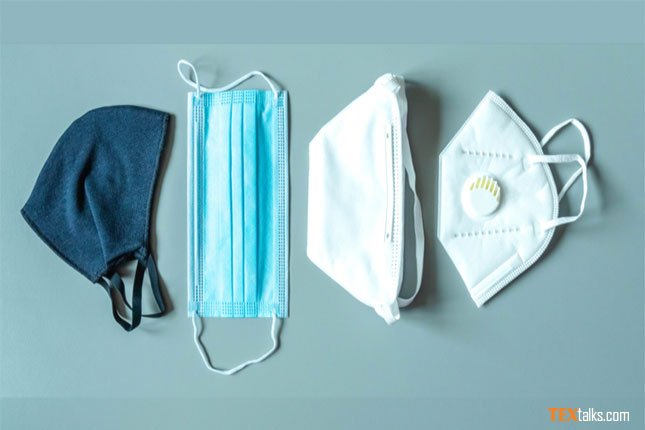
Professor Michael Braungart, director at the Hamburg Environmental Institute and co-founder of the world-renowned Cradle to Cradle environmental standard, has informed that mask wearers unwittingly run the risk of breathing carcinogens, allergens, and tiny synthetic microfibres by wearing both textile and nonwoven surgical masks for long periods.
German scientists have found that wearing specific face masks for long periods could result in potentially hazardous chemicals and harmful microplastics being inhaled deep into human lungs. Masks have been an integral part of the global response to the coronavirus and necessary intervention. But as we start to emerge from this global health crisis, leading scientists are now questioning whether the real risk of exposure to potentially hazardous chemicals from long-term mask-wearing is much higher than the risk of coming into contact with the Sars-CoV-2 virus. This is true especially for children and young adults who are in the low-risk category when it comes to developing severe COVID-19.
The recent findings of Prof. Braungart have been backed up by another leading industry textile chemist Dr. Dieter Sedlak. Dr. Sedlak is the managing director and co-founder of Modern Testing Services Augsburg, Germany.
He said that “I can only say 100 percent that I have similar concerns to Prof. Braungart.”
Studies by Dr. Sedlak have also shown that compounds such as 2-butanone oxime (carcinogenic) blocked diisocyanates used as crosslinkers for perfluorocarbons (PFCs) on face masks. Used in the textile sector as oil and water repellents on fabrics, by-products of PFCs are known to be bio-persistent, and authorities heavily restrict their use in Europe and the USA. Last year, a group of US scientists called for all per- and poly-fluorinated substances (PFAS) to be treated as one single class of chemistry.
It said they should be avoided for non-essential uses due to their hazardous toxicological and eco-toxicological profile.
 Scientists noted that surgical masks had been designed to be worn for particular purposes, such as by clinicians or for a short period before being discarded.
They are not intended to be crumpled up in people’s pockets where the friction and damp environment promotes both fiber abrasion and encourages bacterial colonization over time.
The abrasion can cause the release of tiny microplastics as the polypropylene fibers break down from mechanical wear and tear, finding in tests that some masks shed microfibres classed as hazardous ‘dust’ by the German Social Accident Insurance (DGUV). Fibers of this type of geometry that meet this dust standard are also referred to as ‘WHO fibers’ after earlier work by the World Health Organisation on asbestos.
Phil Patterson of Colour Connections, who also works with the highly respected ZDHC Foundation on chemical management, said, “In my opinion, textile masks do not begin to pass this most basic hazard test for kids, for whom the risks of COVID have been categorically demonstrated to be miniscule.” Therefore, the WHO and other organizations should strictly look into this matter to avoid dangerous human health outcomes.
