

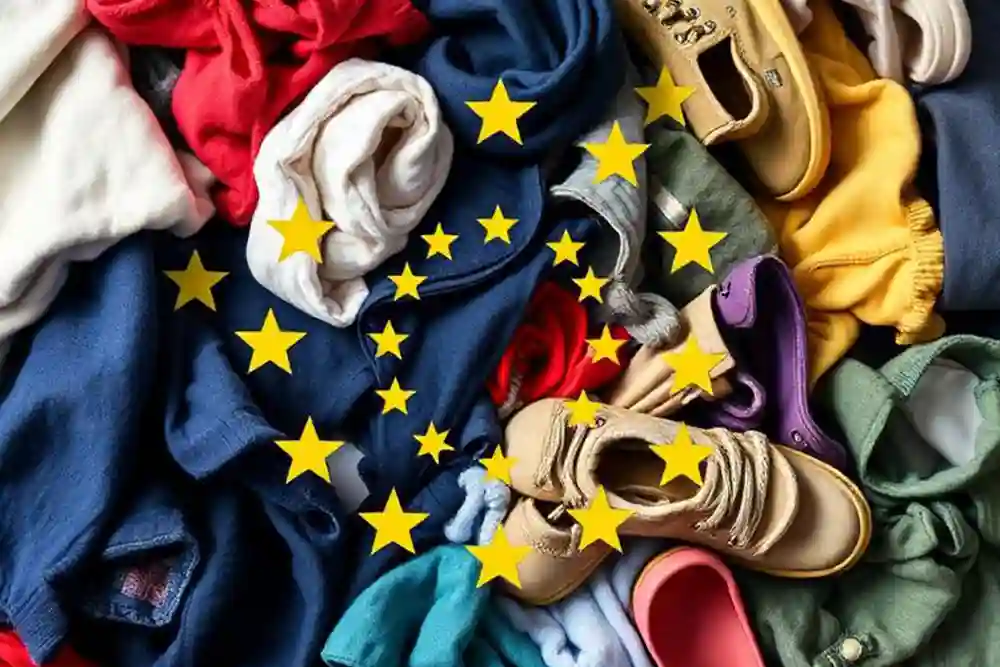
The European Union’s targeted revision of the Waste Framework Directive (WFD) entered into force on 16 October 2025, formally bringing textiles and footwear under mandatory Extended Producer Responsibility (EPR) for the first time.
Why It Matters
This is a structural regulatory shift for fashion, apparel, footwear and home textiles:
- Textile waste is no longer treated as a secondary issue
- Producers must now pay for collection, sorting, reuse, recycling and disposal
- Mislabelled “reusable” textile exports face customs inspections and shipment stops
- Compliance will vary country by country, increasing operational complexity
Who Is Impacted
- Any producer selling, offering to sell, or distributing:
- Apparel and accessories (including leather)
- Household linens, curtains, blankets
- Worn clothing
- Footwear (rubber, plastic, textile, leather)
- Includes non-EU brands selling into the EU via an authorized representative
What Is Now Required
- Mandatory Textile EPR
- Producers must register in each EU Member State
- Compliance typically through Producer Responsibility Organizations (PROs)
- Fees likely linked to:
- Product weight and volume
- Recyclability and reuse potential
- Alignment with EU eco-design rules
- Strict Separation of “Used” vs “Waste” Textiles
- Used textiles → professionally assessed as fit for reuse
- Waste textiles → anything discarded or required to be discarded
This classification now determines:
- Export eligibility
- Documentation requirements
- Inspection authority powers
- Tightened Export Controls
Before exporting textiles claimed as reusable, producers must provide:
- Sales contract explicitly stating direct reuse
- Bale-level proof of professional sorting
- Detailed sorting and assessment records
- Formal declaration that the shipment is not waste
Authorities may inspect and reclassify shipments.
Key Deadlines
- Jan 1, 2025 – Separate textile collection mandatory (already in force)
- Oct 16, 2025 – WFD targeted revision effective
- Jan 1, 2026 – Textile waste composition surveys begin
- Jun 17, 2027 – Member States must transpose into national law
- Apr 17, 2028 – Textile & footwear EPR schemes fully operational
Strategic Implications for Brands
- Higher structural costs for low-value, high-volume products
- Reduced viability of informal reuse exports
- Data discipline becomes mandatory, not optional
- Increased advantage for:
- Durable products
- Repairable designs
- Traceable supply chains
What Companies Should Do in 2026
- Track national implementation drafts country by country
- Model EPR fee exposure by product category
- Audit all reuse and export claims
- Align legal, sustainability, logistics and sourcing teams early
Bottom Line
This is not a reporting exercise.
It is a fundamental redesign of how textiles are priced, managed and regulated in Europe.
