

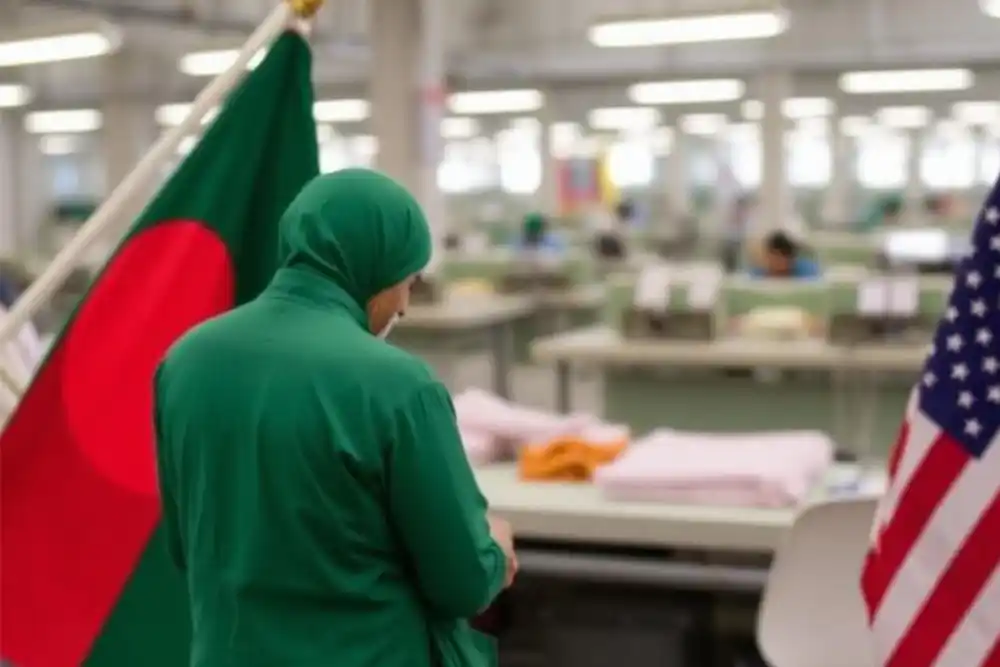
Bangladesh is set to secure duty-free access to the U.S. market for garments produced using American cotton, alongside a reduction in its reciprocal tariff rate, under a bilateral trade agreement scheduled to be signed in Washington on 9 February.
Key outcomes expected
- Duty-free access for Bangladeshi garments made with U.S. cotton
- Reciprocal tariff cut from the current 20% to a likely ~15% (final rate to be announced post-signing)
- Strengthened bilateral trade and sourcing linkages between Bangladeshi apparel exporters and U.S. cotton producers
Commerce Secretary Mahbubur Rahman confirmed the agreement, noting that Bangladesh must meet several conditions to unlock the concessions.
Conditions tied to the deal
To qualify, Bangladesh has agreed to:
- Increase imports from the United States
- Refrain from imposing tariffs on e-commerce
- Withdraw export subsidies on fisheries products
- Tighten intellectual property (IPR) rules to meet U.S. standards
- Support U.S. reform proposals at the World Trade Organization (WTO)
A senior official indicated that IP reforms will require stricter patent protections, reducing flexibilities currently allowed under Bangladeshi law.
E-commerce angle
The deal aligns with a U.S. push at the WTO to make the moratorium on e-commerce tariffs permanent, meaning digitally delivered goods and services would remain tariff-free. While this could reduce government revenue, Bangladesh would retain the right to set annual spending limits on e-commerce purchases.
Strategic sequencing
Before finalising the U.S. agreement, Bangladesh plans to sign an Economic Partnership Agreement (EPA) with Japan in Tokyo on 6 June, signaling a broader strategy to secure preferential access across major markets.
Why it matters
- The U.S. is Bangladesh’s largest export market, with $8.69 billion in exports last fiscal year—dominated by woven and knit garments.
- Bangladesh imported $346 million of U.S. cotton in FY25 (up from $278 million), accounting for ~10% of total cotton imports.
- Industry groups see the deal as mutually beneficial: boosting U.S. cotton sales while improving Bangladeshi apparel competitiveness.
Bottom line:
If implemented as outlined, the agreement could meaningfully improve Bangladesh’s apparel access to the U.S., partially offsetting tariff pressures elsewhere—while deepening U.S.–Bangladesh supply-chain integration around cotton and garments.
