

Europe’s textile industry is relearning an old lesson: competing on cost alone is a losing game. Competing on systems—energy, labour productivity, automation, materials science and circularity—still has a chance.
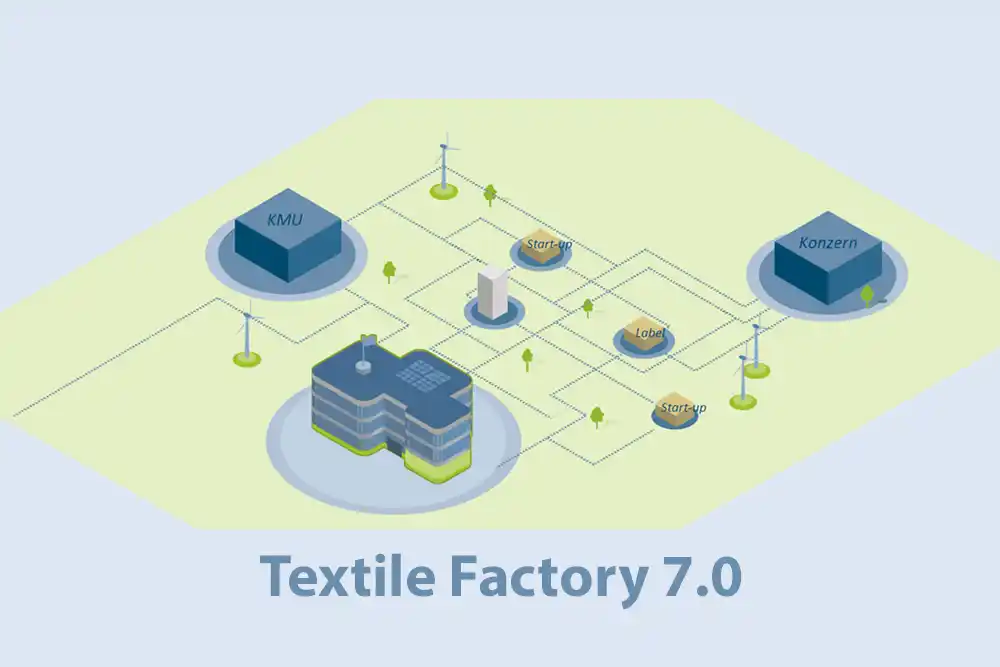
RWTH Aachen’s Institut für Textiltechnik (ITA) has received approval for funding for “Textile Factory 7.0”, a joint initiative to establish a technology and development centre for the textile industry in Mönchengladbach. Partners include Hochschule Niederrhein’s textile institute, regional industry associations, Textile Academy NRW and the city’s economic development agency (WFMG). The project is funded by Germany’s Federal Ministry of Research, Technology and Space (BMFTR).
The concept is explicitly integrative: a fully operational “real-world laboratory” that combines energy efficiency, AI/robotics, and biotechnology, rather than testing these in isolation. The goal is to raise the attractiveness and productivity of regional textile manufacturing, strengthen applied research, and create jobs—an industrial-policy play as much as a research one.
The first market test is organisational: can a consortium convert “future topics” into deployable factory modules. The public kick-off is set for March 19th 2026, framed around four themes—On-Demand Manufacturing, MicroFactory Engineering, Digital Textiles, and Biosphere—with ITA leading on the microfactory and digital tracks. If it works, Mönchengladbach becomes less a legacy textile town and more a template for re-shoring what can be automated.
