

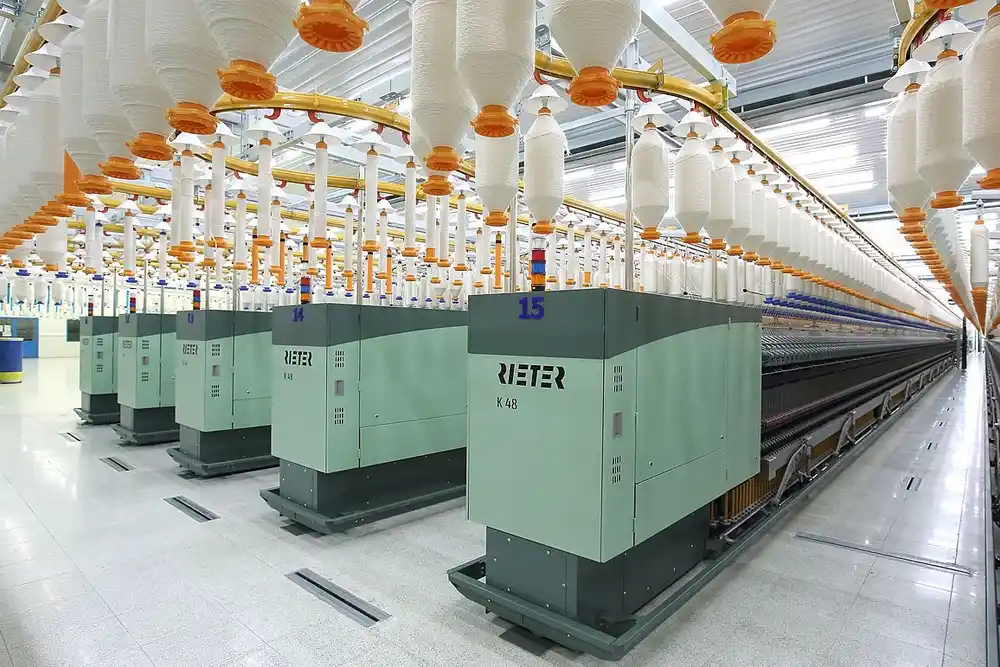
Cotton spinning is an old business facing new constraints. Brands want tighter yarn consistency; mills want lower unit costs; regulators and buyers want cleaner production. That mix is nudging investment towards smarter, more efficient machinery—even as overall market growth remains modest.
The global cotton spinning machinery market is projected to rise from $2.6bn in 2025 to $3.3bn by 2035, implying a 2.4% CAGR (2026–2035). Demand is anchored in the core process chain—opening, carding, drawing, roving, and spinning—and in four technology families: ring, compact, rotor and air-jet systems. Asia-Pacific dominates with 54.1% share (about $1.4bn), while ring spinning holds 49.1% of machinery demand; apparel & garments account for 54.6% of applications.
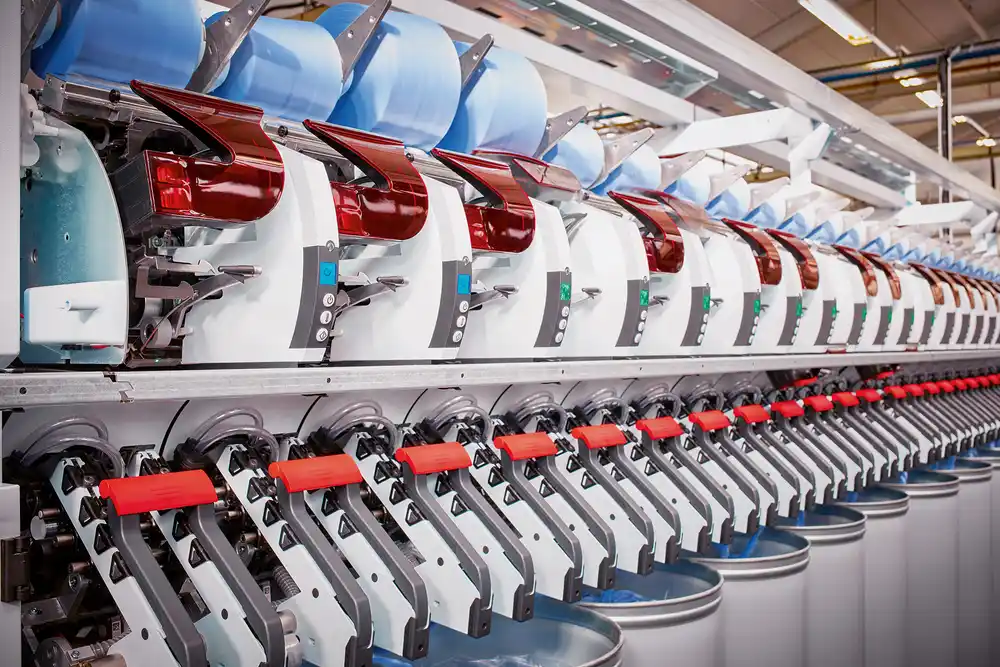
The key driver is not volume; it is performance. Energy intensity is a major pain point: in ring mills, 40–45% of total energy can sit in the ring department, and 70–80% of that in spindle motors. Incremental upgrades therefore, matter. One cited example: changing suction nozzles on an Autoconer 338 winding machine cut energy use 13%, lifted efficiency roughly 3%, and halved yarn-search failures. Speed improvements also shift economics: modern systems are cited at ~250 m/min versus ~150 m/min for older kit.
Growth will come from three levers: automation (monitoring, predictive maintenance), selective capacity additions in emerging regions, and sustainability-led retrofits that cut energy and waste. Suppliers that can prove ROI—kWh saved, defects avoided, uptime gained—will win replacement cycles in a market that otherwise moves slowly.
