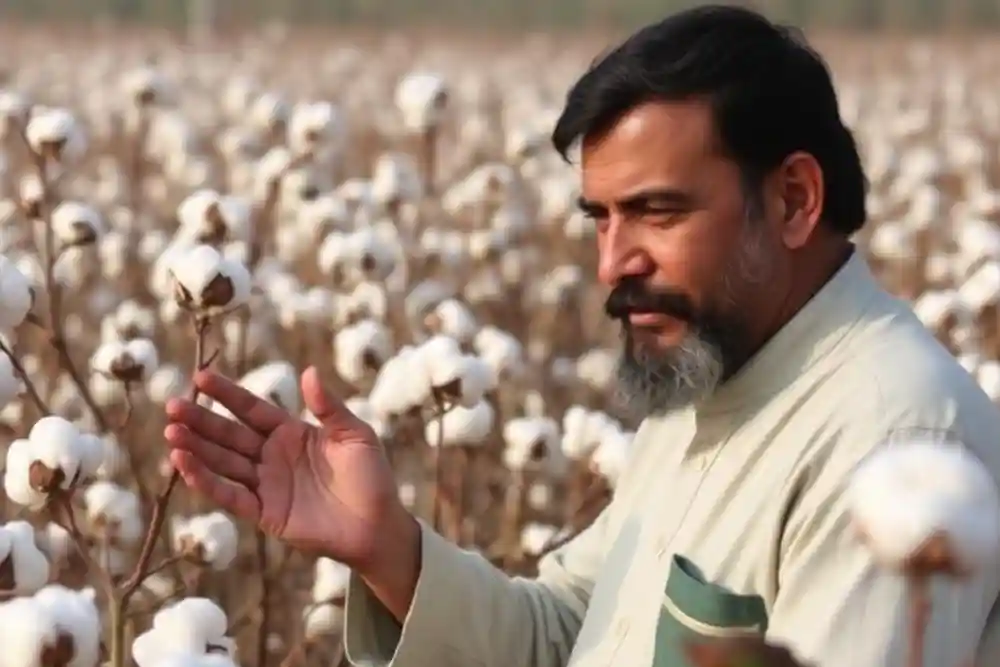
Even a modest crop rebound cannot offset structural decay—leaving textiles exposed to FX shocks and rival supply-chain stability.
Pakistan once spun largely from its own fields. It now buys what it used to grow—and pays for it in scarce dollars. A new EMPAK Strategies report says the country has lost long-standing cotton self-sufficiency, forcing annual imports of $2–3bn and raising costs for the export engine that earns most of Pakistan’s foreign exchange.
EMPAK estimates 2024–25 cotton output at roughly 5m bales—a rebound from the trough, but far below the levels needed to cover domestic demand. The report traces the slide from about 7m bales (2015–16) to around 3.9m (2022–23), then a partial recovery that still leaves the industry import-dependent.
Climate stress is central: higher temperatures, erratic rainfall, water shortages and pest resistance are depressing yields, with a projected +1.5°C to +2°C warming in key cotton zones by 2040.
Import reliance turns cotton into a macroeconomic risk. When FX tightens, mills pay more (or wait longer), weakening competitiveness against rivals with steadier local supply. Governance failures amplify the damage: weak seed regulation, thin extension, poor pest surveillance, limited insurance and inadequate traceability—all now commercial liabilities as buyers demand provable origin and sustainability.
Punjab is trying to re-anchor the value chain: a 700,000-acre early-sowing target and a Rs2bn “Cotton Valley” project in Bahawalpur to upgrade production, ginning and processing.
But pilots won’t fix a national gap. Pakistan needs yield economics: certified seed enforcement, water productivity, climate-resilient varieties, mechanisation, crop-risk protection, and grower–ginner–mill coordination—fast enough to cut the import bill before it becomes permanent.