

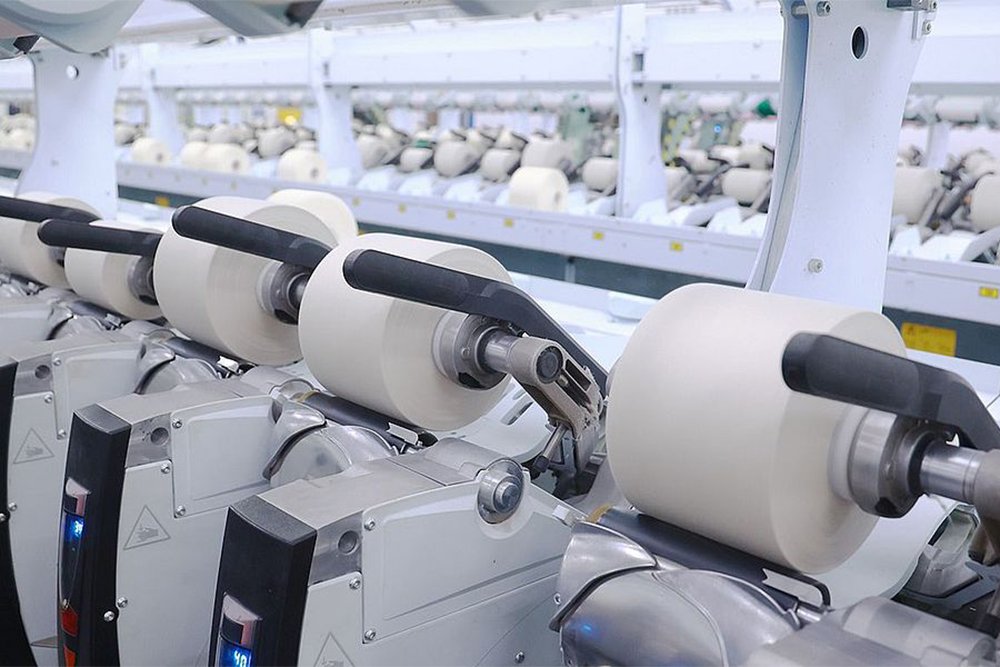
Behind the talk of “automation” lies a simple logic: better winding reduces defects, labour and downstream stoppages—so mills keep investing even when demand is soft.
A new industry outlook projects the textile winding-machine market to grow from $1.9bn in 2026 to $2.8bn by 2036 (a 4.1% CAGR), framing demand as modernisation-led rather than boom-and-bust capacity building.
Procurement is consolidating around two specifications. Precision winders are forecast to hold about 42% share, reflecting their role in package build, tension control and defect minimisation. Automatic machines are expected to dominate operation mode at roughly 60% share, driven by labour scarcity and the economics of consistent output.
Winding is increasingly treated as a quality gate rather than a finishing step. Uniform package density and stable tension improve weaving/knitting efficiency, reduce breakage and cut waste—benefits that compound across the value chain. That is why mature markets skew toward replacement and upgrades, while Asia remains the volume engine as China and India modernise installed bases.
This also sharpens competitive differentiation: vendors win less on headline speed and more on repeatable package quality, automation depth, digital diagnostics and aftersales/retrofit strength—a pattern visible in the positioning of established suppliers in precision winding.
For mills, the pragmatic play is staged capex: retrofit where possible, prioritise automation where labour is binding, and treat winding data as part of QA and traceability. For suppliers, the growth is “sticky” only if they can monetise lifecycle service and Industry 4.0 integration, not just new machine sales.
