

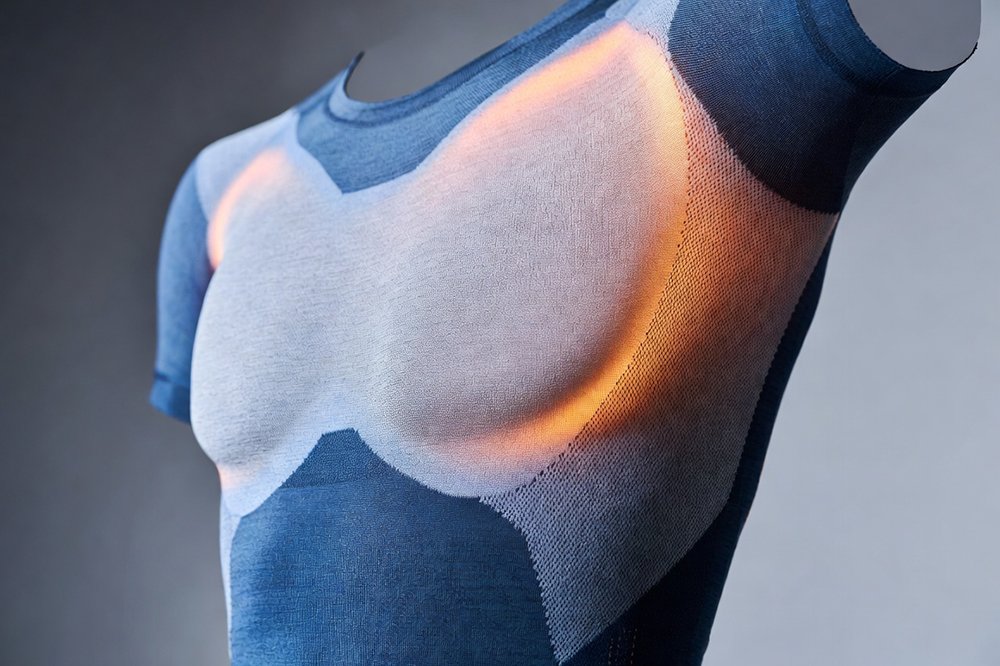
New laboratory results aim to give textile brands a more measurable case for temperature-regulating garments, linking Outlast’s heat-management technology to lower skin temperature, reduced sweating and more stable wear comfort.
Outlast Technologies is reinforcing the performance case for its temperature-regulation platform with new test data generated using Skinos measurement systems, a Japanese thermophysiology research specialist focused on sweat rate, skin temperature and heat flow. The work is intended to move the discussion around thermal comfort beyond marketing language and into measurable physiological response.
According to the white paper, the study compared two identical 90% polyamide / 10% spandex T-shirts under controlled laboratory conditions: one using Outlast Temperature Regulation through its Matrix Infusion Coating (MIC) technology, and one reference garment without Outlast. Subjects completed alternating rest and walking phases in a climate-controlled setting while researchers continuously monitored heat flow, skin temperature and sweat rate at defined body sites.
The reported results support Outlast’s long-standing value proposition. Garments with the technology showed higher heat flow at the back, interpreted as greater absorption of excess body heat into the textile, and consistently lower back skin temperature than the non-Outlast reference shirt. The studies also found lower peripheral skin blood flow and reduced chest sweat rate, suggesting the material may reduce thermal strain and delay the onset of perspiration during activity. Infrared thermography similarly showed a more even and generally lower body surface temperature distribution after extended wear.
Why brands may care
Commercially, the significance is straightforward. Many textile comfort technologies focus on moisture management after sweating begins. Outlast is instead positioning its offer as an earlier-stage intervention: absorbing excess heat before thermal discomfort escalates. That gives brands a more differentiated comfort story across activewear, casualwear, leisurewear and workwear.
The broader question for the market is whether brands can turn that physiological evidence into consumer value at scale. If so, thermoregulation may become less of a niche performance claim and more of a mainstream product feature.
