

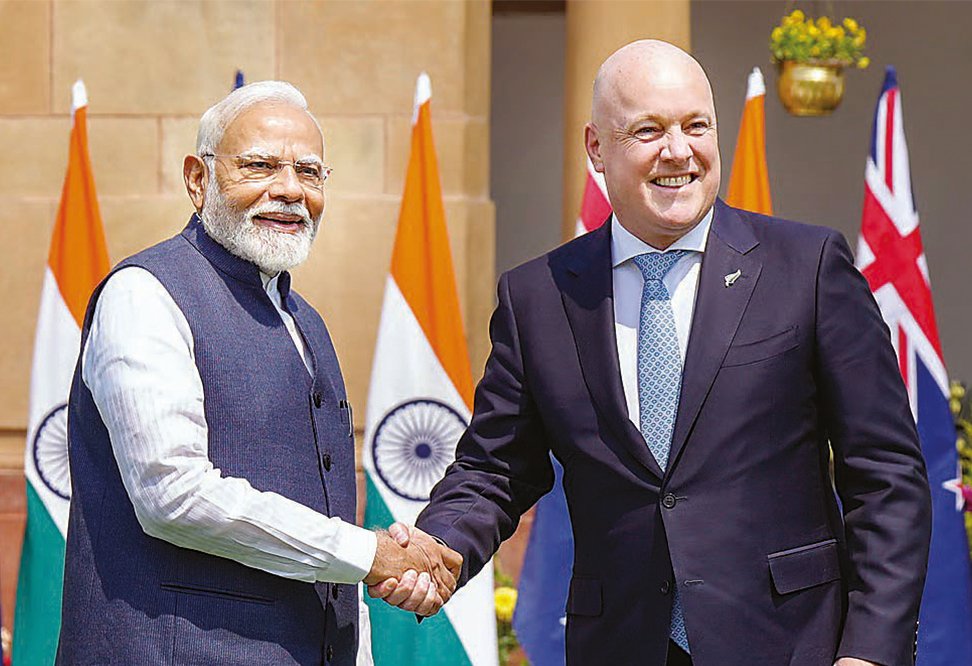
Duty-free access to a high-income market will not transform India’s textile trade alone, but it can help exporters diversify, validate quality and move into higher-value segments.
India’s new Free Trade Agreement with New Zealand is expected to support textile and apparel exports by giving Indian products duty-free access to a small but quality-conscious market. The Confederation of Indian Textile Industry said the pact can help exporters reduce dependence on select markets and contribute to India’s broader ambition of building a $350 billion textile and apparel sector by 2030, including $100 billion in exports.
A market access gain
The agreement comes at a useful moment for Indian exporters facing geopolitical volatility, weak demand in some traditional markets and rising cost pressure. Under the FTA, Indian textiles are expected to receive duty-free access in New Zealand, improving price competitiveness for labour-intensive and value-added categories. Wider reporting on the agreement says Indian exports will receive duty-free access across New Zealand tariff lines, with textiles among the sectors expected to benefit.
CITI noted that made-up textile articles were already the fourth-largest category of Indian imports into New Zealand in the year ended December 2025. New Zealand’s imports of Indian made-ups stood at NZ$80.22 million during that period, according to CITI’s citation of New Zealand’s Ministry of Foreign Affairs and Trade data.
Where Indian exporters may gain
The strongest opportunities are likely to be in home textiles, sustainable textiles and technical textiles. These categories fit New Zealand’s higher-income consumer base and procurement expectations around quality, traceability and environmental performance.
New Zealand’s role as a supplier of high-quality wool also matters. Indian manufacturers could import premium wool, process it through India’s manufacturing base and export higher-value garments or textile products. That would support the shift from volume-led exports toward margin-led products.
The scale question
The FTA is strategically useful but commercially modest. New Zealand is not large enough to replace demand from the US, EU or Middle East. Its bigger value lies in market diversification, brand validation and product upgrading.
The next test will be execution: whether Indian firms can convert tariff access into stable buyer relationships, compliance-led product development and premium positioning. For exporters, the opportunity is not just to sell more to New Zealand, but to use the market as proof that Indian textiles can compete on quality, sustainability and reliability.
