

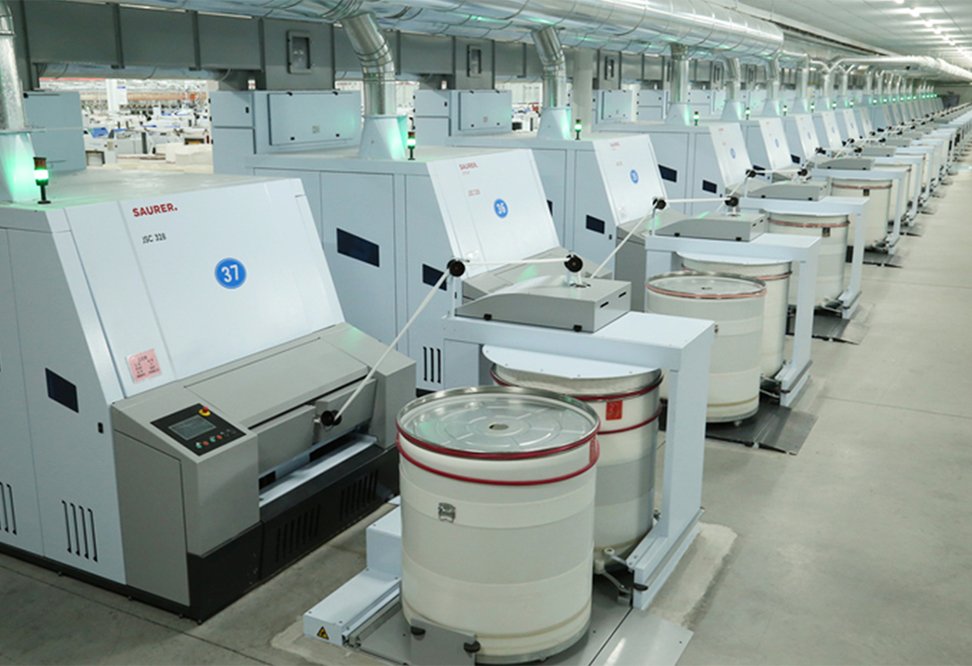
Demand for higher-quality yarn, recycled fibers and automated spinning preparation is keeping carding machinery on a steady growth path through 2033.
The global carding machines market is projected to rise from $1.4 billion in 2026 to $1.9 billion by 2033, expanding at a 4.8% CAGR, according to Persistence Market Research. Carding remains one of the most critical stages in yarn manufacturing, converting opened fibers into uniform sliver before spinning. The market’s growth is being driven less by capacity expansion alone and more by mills’ need for quality consistency, lower downtime, energy efficiency and better handling of recycled and blended fibers.
Asia holds the production base
Asia Pacific is expected to lead the market with a 36% share in 2025, supported by large-scale textile manufacturing in China, India, Bangladesh and Vietnam. These countries continue to invest in spinning and yarn-production capacity to serve apparel, home textile and export markets. For machinery suppliers, this keeps Asia the volume centre of demand, especially for high-speed, automated carding systems that can support large mill operations.
Flat carding machines remain the dominant technology, accounting for an estimated 65% market share in 2025. Their strength lies in short-staple processing, particularly cotton, where uniform fiber alignment and sliver quality determine downstream yarn performance.
Automation changes the buying case
The purchase decision is increasingly linked to digital controls, sensors, predictive maintenance and process stability. For high-output spinning mills, carding performance affects yarn evenness, nep levels, waste rates and machine uptime. This makes automation a commercial issue, not merely a technical upgrade.
Spinning mills are expected to account for 60% of application demand in 2025, while cotton carding machines represent 55% of fiber-type demand. Yet the fastest-growing opportunities are likely to come from synthetic, blended and recycled fibers, where mills require more flexible settings and better contamination control.
Recycling and nonwovens open new demand
Circular textiles are creating a fresh role for carding technology. Recycled fibers are more variable than virgin fibers, making controlled opening, blending and web formation increasingly important. Nonwoven manufacturing is also expanding in hygiene, medical, filtration and industrial applications, creating demand for specialised carding systems beyond conventional spinning.
The main constraint remains capital cost. Advanced carding machines require substantial upfront investment, especially for small and mid-sized mills facing high financing costs and tighter compliance requirements. The next market signal will be whether machinery makers can offer energy savings, recycled-fiber capability and digital maintenance benefits strong enough to justify faster replacement cycles.
