

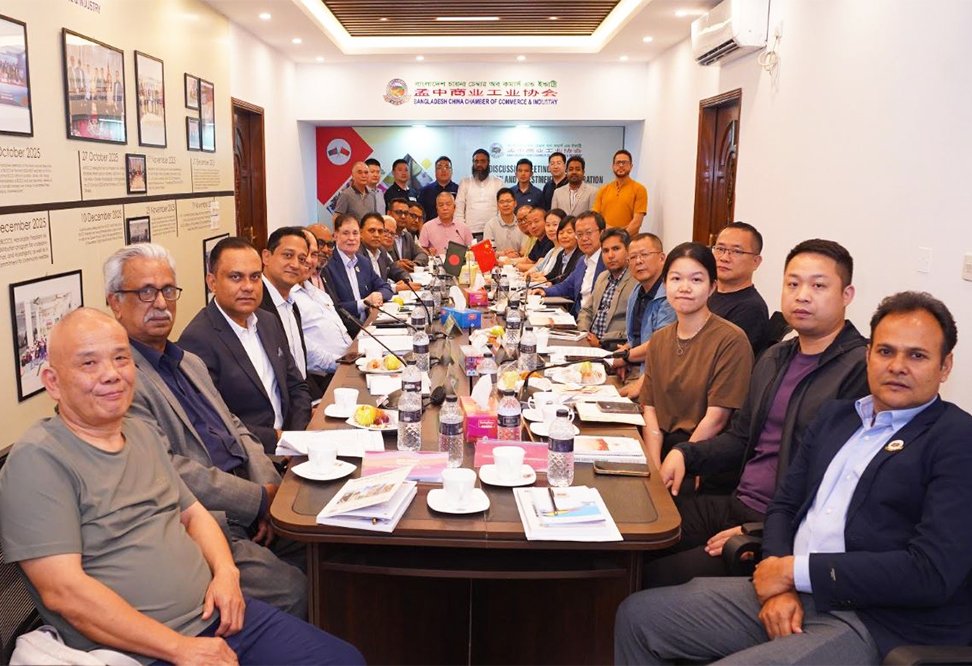
Talks with BGMEA focused on Chinese FDI, technology transfer and Bangladesh’s need to reduce dependence on imported fabrics, especially in man-made fibres and advanced processing.
A Chinese textile delegation has held talks with the Bangladesh Garment Manufacturers and Exporters Association to explore foreign direct investment and technology partnerships in Bangladesh’s textile sector. The discussions centred on man-made fibres, synthetic textiles, dyeing, printing, textile chemicals and technical textiles—areas where Bangladesh wants deeper backward linkage capacity to support its garment export base.
Fabric imports define the opportunity
Bangladesh highlighted its $8–9 billion fabric import market as a major opening for Chinese investors. For a country that is one of the world’s largest garment exporters, dependence on imported fabrics remains a strategic weakness, particularly as buyers demand shorter lead times, traceable materials and more diversified product ranges.
The visiting delegation included representatives from the China Dyeing and Printing Association, the China National Textile and Apparel Council, and firms involved in dyeing, printing and chemical manufacturing. BGMEA urged Chinese companies to consider investment and technology transfer in high-value textile areas, while also requesting company profiles and production-capacity details to help create direct business linkages with Bangladeshi manufacturers.
Why Chinese capital matters
The commercial logic is clear. Bangladesh has built global scale in garment assembly, but its next phase depends on stronger upstream textile capability. Chinese investment could help fill gaps in synthetic fabrics, finishing, chemicals and technical textile know-how. It could also support Bangladesh’s shift beyond basic cotton apparel into higher-margin products.
The delegation also visited dyeing and printing factories in Bangladesh, suggesting that investors are assessing existing industrial capacity rather than holding only diplomatic-level talks. Separately, Chinese representatives sought information on government incentives, regulatory requirements, tax and VAT treatment for textile chemical production, machinery-import rebates and land availability for investment projects.
The execution test
The opportunity is significant, but not automatic. Textile FDI requires reliable energy, clear incentives, environmental compliance, land access and predictable regulation. Dyeing, printing and chemical investments are especially sensitive because they require wastewater treatment, chemical management and buyer confidence.
The next signal to watch is whether these talks turn into specific investment proposals, joint ventures or technology-transfer agreements. If Bangladesh can convert Chinese interest into compliant upstream capacity, it could shorten lead times, reduce fabric-import dependence and strengthen its position in the next generation of apparel sourcing.
