

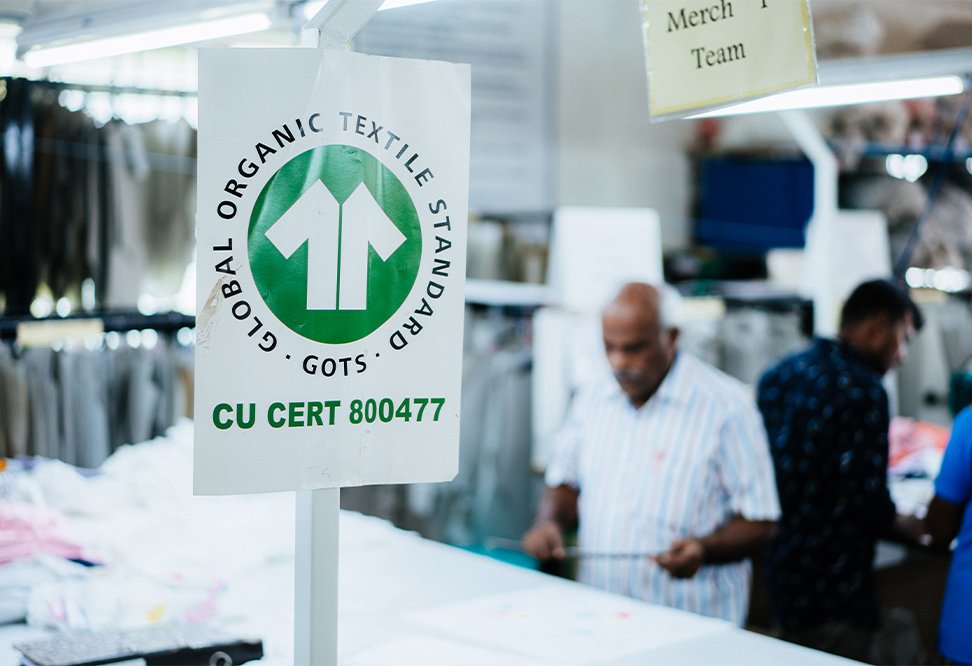
The growth of GOTS certification shows how organic textile standards are becoming compliance infrastructure for brands and suppliers, not just sustainability labels.
Global Organic Textile Standard certification grew strongly in 2025, with 17,800 certified facilities reported worldwide, up 15.3% year on year across 95 countries. The figures, released in Global Standard’s 2025 Annual Report, point to rising demand for independently governed textile standards as brands, mills and manufacturers face tighter rules on traceability, due diligence and sustainability claims.
Certification becomes risk management
GOTS has long been associated with organic textiles, but its role is expanding. The standard covers certified organic fibres through processing, manufacturing and labelling, with environmental and social requirements across the value chain. That system-level scope is becoming more commercially relevant as regulators and buyers demand proof rather than broad sustainability language.
Global Standard said the certification increase came despite geopolitical uncertainty and changing regulatory requirements. For suppliers, certification can help demonstrate chain-of-custody control, chemical management, social compliance and responsible processing. For brands, it helps reduce the risk of unsupported environmental claims and weak supplier documentation.
Due diligence moves into the standard
A major development is GOTS’ closer alignment with international due diligence expectations. Global Standard reported that an OECD due diligence assessment found GOTS 98% fully or partially aligned with assessed criteria. This matters because brands sourcing from complex textile supply chains increasingly need systems that connect certification with risk identification, monitoring, grievance handling and remediation.
GOTS Version 8.0, released in March 2026, further strengthens accountability from fibre to finished product. It introduces mandatory due diligence, enhanced chemical and climate criteria, and new circularity requirements. Audits under the new version are expected to become mandatory from March 1, 2027.
Beyond organic fibres
Global Standard is also preparing the Global Responsible Textile Standard, or GRTS, which would extend its framework beyond organic fibres. A second public consultation for Draft 2 runs from April 1 to April 30, 2026.
The next test is whether certification growth translates into stronger supplier practice rather than paperwork. As due diligence, green-claims scrutiny and Digital Product Passport expectations advance, standards such as GOTS will be judged by data quality, audit integrity and their ability to support credible product claims at scale.
