

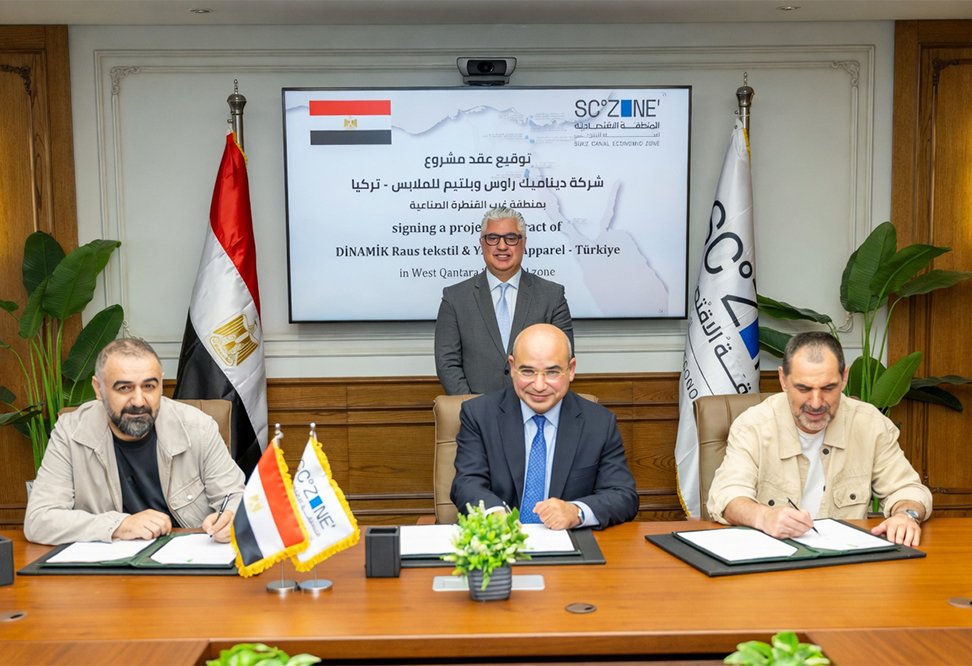
The project adds another export-oriented textile facility to Egypt’s Suez Canal Economic Zone, reinforcing Qantara West’s bid to become a regional apparel and textile manufacturing hub.
Egypt’s Suez Canal Economic Zone has signed an $8 million investment agreement with Turkish firms YILTEM Apparel and Dinamik Raus Tekstil to establish a ready-made garments and textiles factory in the Qantara West Industrial Zone. The project will cover 21,000 square metres, create about 700 direct jobs, and direct 90% of production to export markets, with the remaining 10% serving Egypt’s domestic market.
Turkish capital builds momentum
The new project takes the number of Turkish investments in the zone to 15, with total Turkish investment reaching about $560.2 million, according to SCZONE chairman Walid Gamal El-Din. A further Egyptian-Turkish alliance project valued at $2.1 million has also been noted by the authority.
For Egypt, the commercial significance lies in more than one factory. Turkish textile and apparel manufacturers bring sourcing relationships, production know-how and export-market experience. Their presence can help Egypt strengthen its position as a nearshore supplier to Europe and the Middle East, especially as brands look for alternatives that combine competitive labour, trade access and shorter shipping routes.
Value-added production
The Qantara West facility is expected to produce garments and textile products using modern manufacturing, dyeing and fabric-treatment technologies. This matters because Egypt’s textile strategy depends on moving beyond basic assembly into higher-value processing, finishing and export-ready product development.
Qantara West is being positioned as a textile and garment cluster inside SCZONE, supported by industrial land, logistics links and policy attention. El-Din said the project reflects SCZONE’s strategy of attracting advanced industrial investment and building integrated production chains.
The execution test
The deal fits Egypt’s wider effort to expand manufacturing exports and make better use of its location near the Suez Canal. But the result will depend on implementation speed, reliable utilities, customs efficiency, labour availability and compliance standards, particularly for dyeing and fabric treatment.
The next signal to watch is whether Qantara West continues converting Turkish interest into operational factories. If the zone can deliver land, services and export logistics consistently, Egypt could become a stronger competitor in regional apparel sourcing—especially for buyers seeking shorter lead times than Asia can offer.
