

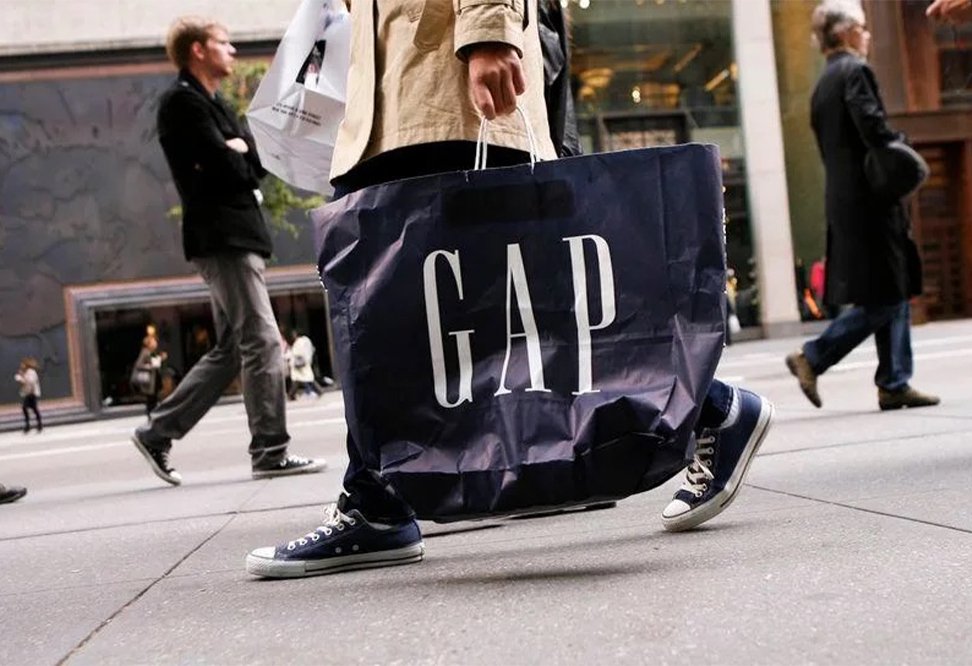
The retailer is still improving profitability, but slower discretionary spending is now testing the turnaround at its largest brand.
Gap Inc. has lowered its full-year sales forecast after weaker demand at Old Navy and continued pressure on U.S. consumers exposed the limits of its recent turnaround. The company now expects fiscal 2026 net sales to rise 1% to 2%, down from its earlier forecast of 2% to 3%, even as it raised its adjusted earnings outlook following stronger gross margin and expected tariff relief. Reuters reported that Gap shares fell about 15% in after-hours trading after the update.
Old Navy slows the group
The key concern is Old Navy, Gap’s largest banner and the group’s most important volume brand. In the first quarter ended May 2, 2026, Gap Inc. reported net sales up 1% and comparable sales up 2%, its ninth consecutive quarter of positive comps. But Old Navy’s comparable sales rose only 1%, while the Gap brand delivered a much stronger 10% comparable-sales gain. Banana Republic grew comps by 2%, while Athleta remained the weakest business, with comparable sales down 11%.
The softness was concentrated in women’s apparel. Reuters said Old Navy was hurt by underperforming women’s dresses, while American Eagle also flagged weaker demand in women’s bottoms, suggesting a broader challenge in seasonal women’s categories rather than a Gap-specific execution issue alone.
Margins improve, demand does not
Gap’s profitability picture is better than its sales signal. First-quarter gross margin reached 40.5%, ahead of outlook, and adjusted diluted EPS was $0.38. The company raised its full-year adjusted EPS forecast to $2.30–$2.40, from $2.20–$2.35 previously.
For suppliers, the message is mixed. Better margins may support disciplined sourcing, but weaker sales growth usually means tighter inventory control, sharper pricing negotiations and more cautious order placement. Gap also returned $464 million to shareholders through buybacks and dividends in the quarter, showing financial strength even as demand visibility weakens.
The sourcing signal
The next issue to watch is whether Old Navy can recover through denim, activewear and sharper seasonal assortments in the second half. If value-led U.S. apparel demand remains weak, exporters serving mass retail should expect shorter order visibility, more selective buying and continued pressure to deliver speed, price and flexibility.
