

The 10-year initiative will combine automation, advanced materials, digital manufacturing and workforce development to strengthen a domestic textile supply chain considered critical to US military readiness.
North Carolina State University has been selected to lead FutureTEX, a 10-year US defense initiative with a funding ceiling of $480 million to modernise domestic textile manufacturing. The programme begins with $36 million in first-year funding and will connect manufacturers, universities, government agencies and workforce organisations.
From reshoring to advanced manufacturing
FutureTEX is not intended simply to recreate labour-intensive US textile production. Its focus is on automation, digital infrastructure, AI, advanced materials and modern manufacturing equipment capable of improving productivity while developing new military and commercial textile technologies.
Applications extend beyond uniforms to parachutes, smart textiles, protective equipment, composites for drones and other defense products. FutureTEX will also map domestic manufacturing capabilities so government agencies can identify suppliers able to respond rapidly during emergencies or demand surges.
The strategy addresses a national-security constraint. The Berry Amendment generally requires specified clothing, fabrics, natural-fibre products and synthetic or coated fabrics purchased with US defense appropriations to be produced domestically, subject to statutory exceptions.
National textile network takes shape
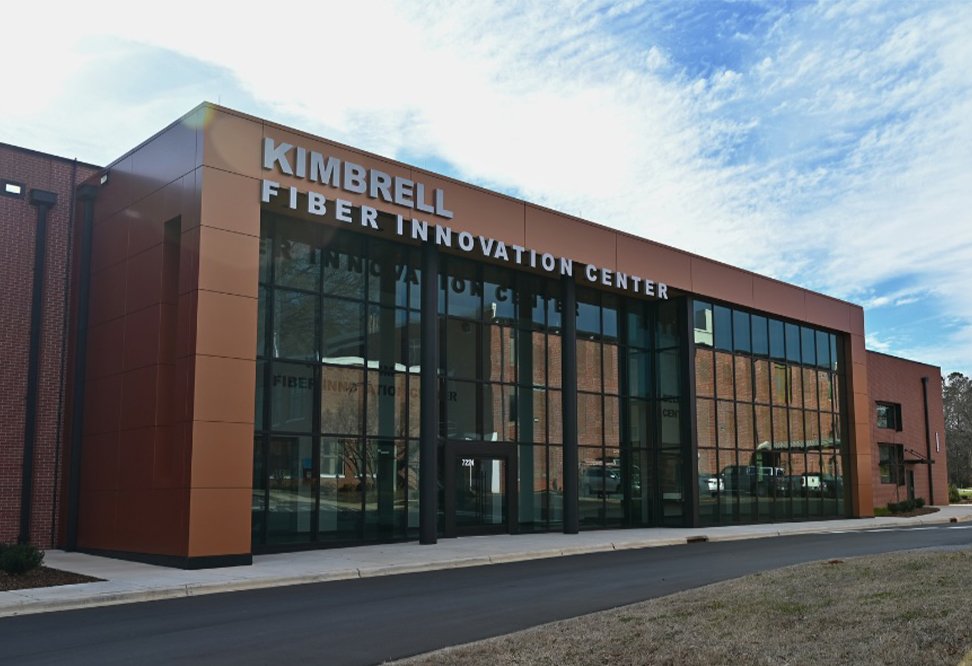
Core FutureTEX partners include Drexel University, Gaston College, Georgia Tech, ISAIC and UMass Lowell. NC State and Gaston College will establish a nonprofit organisation to administer the initiative from Gaston College’s Kimbrell Campus in Belmont, North Carolina, supported by hubs in Raleigh, Philadelphia, Atlanta and Lowell.
The initiative is also recruiting manufacturers and has received more than 100 industry letters of support, according to NC State.
Defense spending becomes a textile technology catalyst
For US textile manufacturers, FutureTEX could provide a route to commercialise automation, fibre innovation, functional fabrics and digital production technologies whose markets extend beyond defense.
The key qualification is funding: $480 million is a 10-year ceiling, not a fully committed upfront investment. The programme’s success will depend on how quickly its first $36 million produces deployable technologies, modernised factories and commercially competitive domestic capacity.
