

The investment moves Kruger from pulp and paper into nonwovens, targeting plastic-free wipe materials as brands and retailers seek alternatives to synthetic substrates.
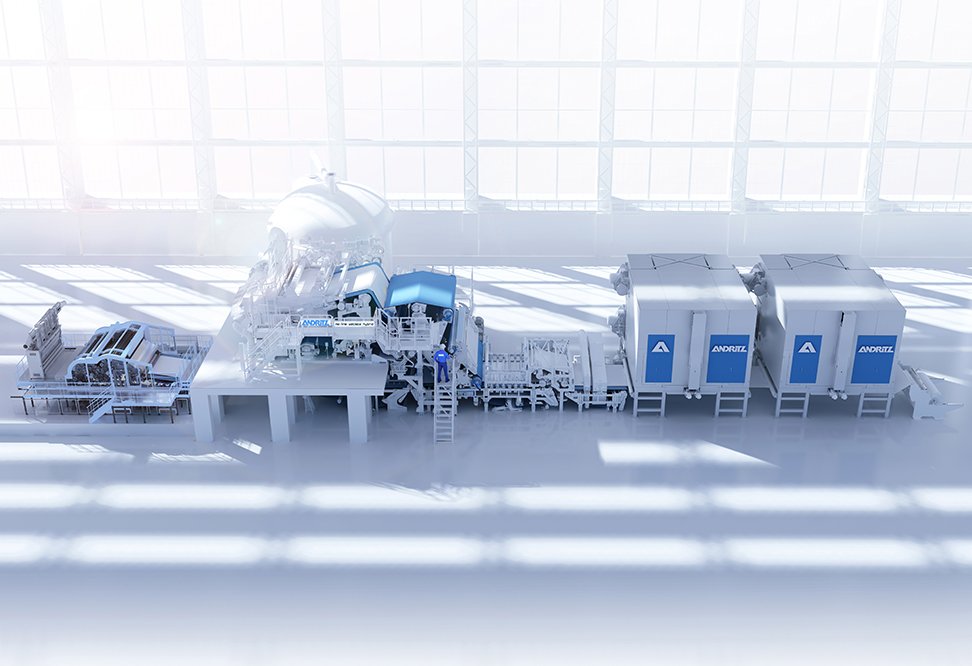
Kruger Inc. is entering the nonwovens market with a $333 million investment in a new wipe-materials platform in Trois-Rivières, Québec. The Canadian pulp, paper, tissue and packaging group has ordered a complete ANDRITZ Wetlace™ hybrid line for its newly formed Kruger Nonwovens division, with production scheduled to start in 2028 at a site adjacent to the company’s Wayagamack mill.
A new route beyond paper
The project marks a strategic diversification for Kruger, which was founded in Montréal in 1904 and employs about 6,000 people across Canada and the United States. Its existing businesses include tissue, recycled containerboard, corrugated packaging, pulp and paper products, renewable energy and paper recycling.
The new line will manufacture wipe materials described by Kruger and ANDRITZ as plastic-free and chemical-free, using renewable fibre-based inputs rather than plastic fibres or chemical binders. Kruger says the investment supports its long-term plan to turn renewable resources into everyday essentials while entering a market still dominated by synthetic wipe substrates.
Wetlace becomes the core technology
ANDRITZ will supply stock preparation, approach flow, an inclined wire former, hydroentanglement with filtration, two through-air dryers, a quality-control system, full engineering, and supervision for erection and commissioning. The supplier will also provide operator training during start-up and later through its technical centres.
The Wetlace hybrid platform combines wetlaid and spunlace principles, allowing producers to process natural fibres such as wood pulp and cellulosic fibres into uniform, high-performance nonwovens. ANDRITZ describes the technology as flexible enough for classical wipes, flushable wipes and hybrid structures combining different fibre layers.
Regional and market impact
The project is expected to create 56 permanent jobs, raise employment at the Île-de-la-Potherie site to more than 340, and support nearly 500 direct and indirect jobs during construction and equipment installation. It includes public support from Canada and Québec, including a $35 million federal contribution and financing from Investissement Québec.
The next test will be commercial: whether Kruger can convert paper-sector fibre expertise into reliable, cost-competitive nonwoven substrates that meet wipe-brand requirements on absorbency, strength, softness, dispersibility and sustainability claims.
