

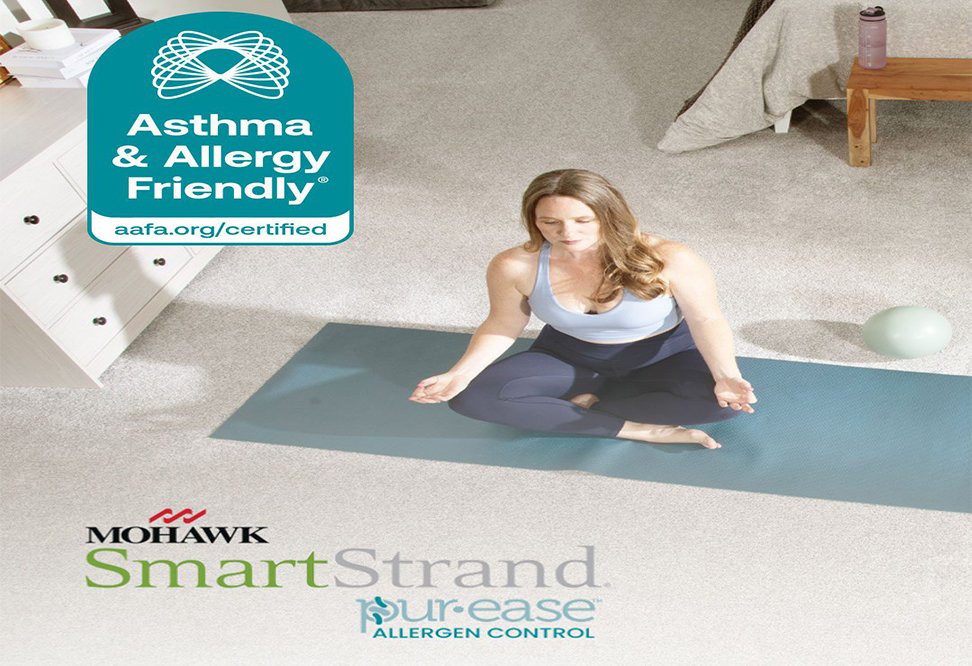
Pur-Ease gives carpet a new performance claim: not only softness and stain resistance, but measurable allergen reduction for health-conscious homes.
Mohawk has introduced Pur-Ease™ technology across selected SmartStrand® carpet styles, positioning the flooring range around easier care, indoor air quality and allergy-sensitive living. The company says SmartStrand carpets treated with Pur-Ease are the first treated carpet products to earn the Asthma & Allergy Friendly® Certification, supported by independent testing under the programme’s enhanced textile flooring standard.
Probiotics enter carpet performance
Pur-Ease uses natural probiotics integrated into the carpet to reduce common household allergens, including pet dander, pollen and dust mite allergen. Mohawk says the technology reduces these allergens by up to 75% compared with untreated carpet, with continued reduction over time, even after multiple deep cleanings.
The claim is commercially significant because carpet has often been viewed cautiously in homes where asthma or allergy concerns influence flooring decisions. By adding a tested allergen-reduction function, Mohawk is trying to shift carpet from a potential allergen reservoir to a more actively managed indoor-environment product.
Certification raises the bar
The Asthma & Allergy Friendly® Certification Program is a collaboration between the Asthma and Allergy Foundation of America and Allergy Standards Limited. Products are tested against defined standards to assess whether they reduce exposure to allergens and irritants and are suitable for people with asthma and allergies.
AAFA said SmartStrand with Pur-Ease was evaluated under its ASP:05-03 Textile Flooring Standard, including an addendum for carpet products with substantiated allergen-related technologies. Reported results included at least 75% reduction in common allergens, at least 50% reduction of allergens trapped within carpet fibres, and no increase in airborne allergen levels during use.
Flooring becomes a wellness category
For flooring retailers and home-textile suppliers, the development shows how residential interiors are being reframed around health, cleanability and evidence-backed performance claims. Softness, durability and stain resistance remain central, but indoor-air and allergen credentials are becoming stronger purchase drivers.
The next test will be consumer adoption: whether buyers treat allergen-reducing carpet as a premium feature, and whether similar health-linked technologies spread across rugs, upholstery and other textile-based interior products.
