

The appointment gives Pakistan’s value-added garment sector a stronger voice in international discussions on sourcing, trade, sustainability and supplier–buyer relations.
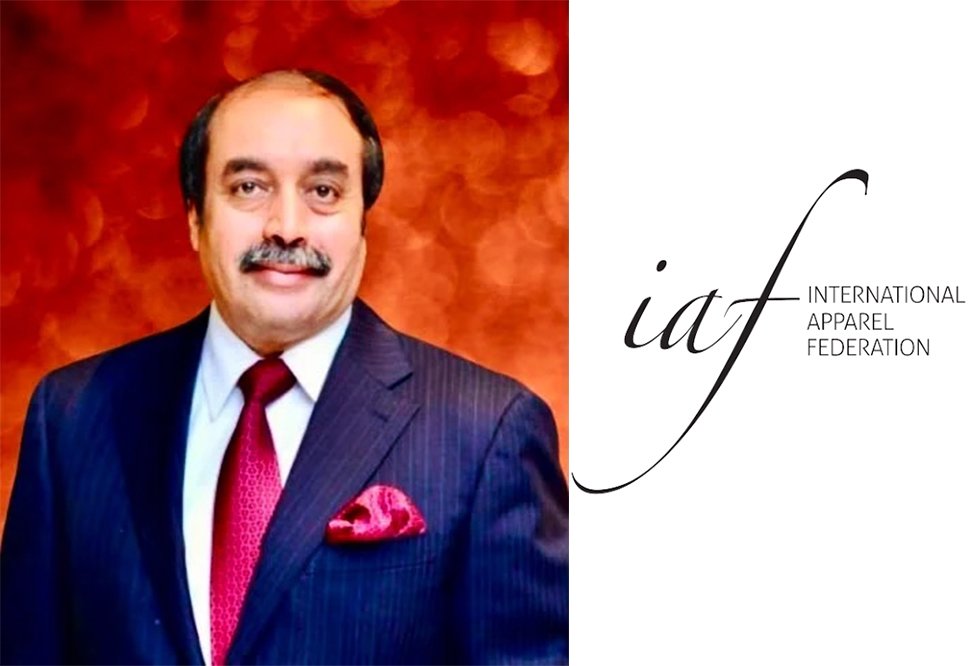
Ijaz A. Khokhar, a former chairman of the Pakistan Readymade Garments Manufacturers and Exporters Association, has been elected vice-president of the International Apparel Federation, becoming the first Pakistani apparel manufacturer to hold the position.
According to PRGMEA, IAF president Stefano Festa Marzotto nominated Khokhar in recognition of his longstanding involvement with the federation and contribution to the apparel industry. The nomination was subsequently endorsed by the IAF General Assembly.
A seat in global industry discussions
Founded in 1972, the IAF represents apparel manufacturers, national associations and allied companies across major sourcing and consumer markets. Its agenda covers purchasing practices, decarbonisation, digitalisation, transparency, education and the institutional infrastructure required for global apparel trade.
Khokhar has previously served as an IAF board member and regional president. The federation’s current leadership page still identifies him as a board representative for PRGMEA rather than listing him on the executive committee, suggesting the website may not yet reflect the newly announced appointment.
For Pakistan, the role offers an opportunity to contribute more directly to discussions that increasingly shape commercial relationships between brands, retailers and manufacturers.
Sialkot exporter gains wider platform
Khokhar heads Ashraf Industries in Sialkot, a manufacturer and exporter of martial-arts uniforms established in 1969. He has served several terms as PRGMEA chairman and currently acts as its chief coordinator.
He is also a founding executive-board member of the Asian Apparel Federation and has held roles with the Federation of Pakistan Chambers of Commerce and Industry, the SAARC Chamber and Sialkot Dry Port Trust. He received Pakistan’s Sitara-e-Imtiaz in 2007.
Influence must translate into outcomes
The appointment is symbolically important, but its commercial value will depend on execution. Pakistan’s exporters face weak global demand, rising compliance costs, energy-price pressures and increasing requirements for traceability and environmental data.
The next test will be whether Khokhar’s position helps secure stronger representation for producing countries, more balanced purchasing practices and practical support for SME exporters. Measurable gains would include improved market access, international partnerships and greater inclusion of Pakistan’s manufacturing priorities in IAF programmes.
