

The investment addresses a critical machinery-industry constraint: securing ultrafast laser sources without extended lead times or dependence on a single supplier.
UK-based industrial laser manufacturer Luxinar has expanded production of its Pulsecore femtosecond laser range, aiming to provide machine builders and system integrators with predictable delivery times of approximately three to four months. The company is positioning supply reliability alongside technical performance as a central purchasing criterion for manufacturers developing precision-processing equipment.
Aionis moves beyond initial specifications
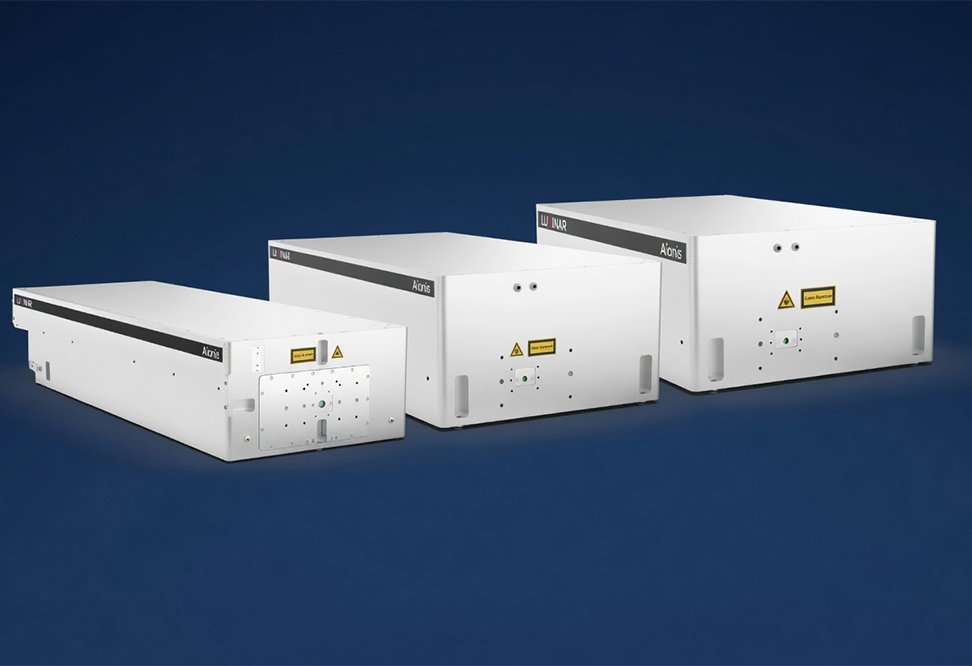
The expansion supports Luxinar’s recently launched Aionis ultrafast laser platform, offered at wavelengths of 515, 1,030 and 1,950 nanometres. Different wavelengths allow manufacturers to optimise interaction with specific materials for surface ablation, subsurface modification, drilling, cutting and processing through transparent substrates.
Luxinar says continuing validation has achieved output exceeding 100 watts and pulse durations below 350 femtoseconds. Its published feature list describes nominal power of up to 100 watts, indicating that the higher figure represents validation performance rather than necessarily the guaranteed commercial specification. The platform also offers pulse-on-demand and burst operating modes for continuous industrial use.
Application support moves closer to production
The company has expanded testing and process-development capacity through laboratories in Germany and a Smart Lab in the UK. The British facility supports live-streamed trials, real-time engineering feedback and remote process adjustments, helping customers assess feasibility before integrating a laser into production machinery.
Target applications include semiconductor and microelectronics manufacturing, glass, ceramics, diamond, silicon carbide, thin foils, photovoltaics and medical devices. These processes require tightly controlled energy delivery with limited heat-affected zones.
Textile relevance remains specialised
Luxinar supplies lasers to textile, apparel and automotive-fabric processors, particularly for cutting, denim marking, engraving and edge sealing. However, the company currently associates those mainstream textile applications mainly with its CO₂ laser portfolio rather than Aionis femtosecond technology.
The immediate commercial significance is therefore strongest for advanced machinery and precision-material manufacturers. The next test will be whether expanded capacity consistently delivers the promised lead times while maintaining power stability, pulse quality and 24-hour reliability as order volumes rise.
