

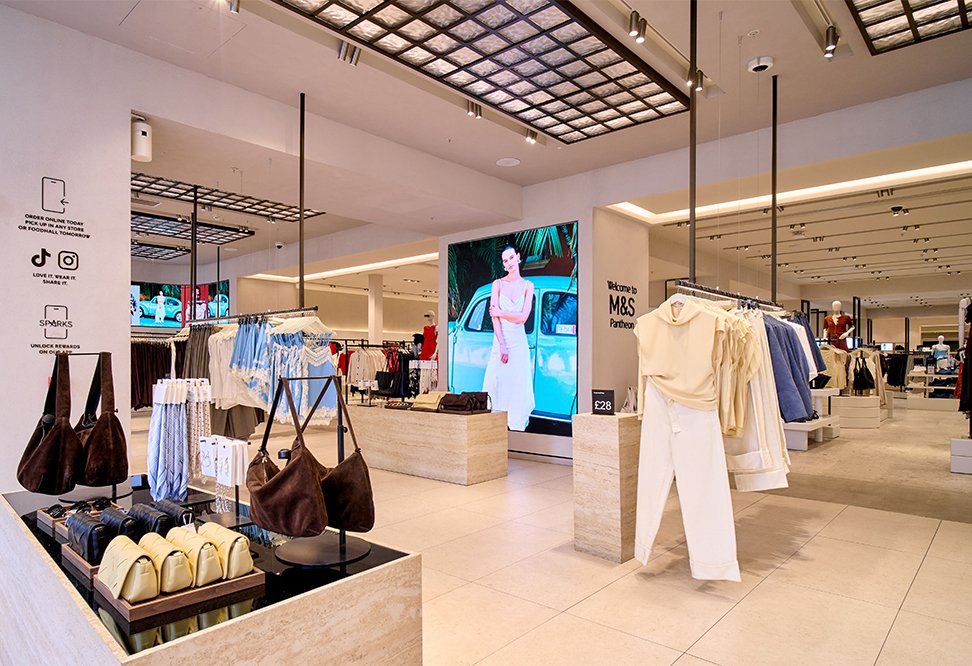
The Pantheon revamp combines curated fashion presentation, digital merchandising and experiential retail as Marks & Spencer prepares to modernise its ageing store estate.
Marks & Spencer has completed the transformation of its Pantheon flagship on London’s Oxford Street, positioning the nearly 100,000-square-foot store as a testing ground for future fashion, home and beauty formats. The four-floor site will trial new layouts and services before successful features are introduced across the retailer’s wider estate.
From department store to curated rooms
The renewed fashion floors replace conventional rows of merchandise with dedicated rooms organised around brands, categories and customer needs. Ambient lighting, digital displays, heritage-green finishes, scents and curated music are intended to make the store easier to navigate and more visually distinctive.
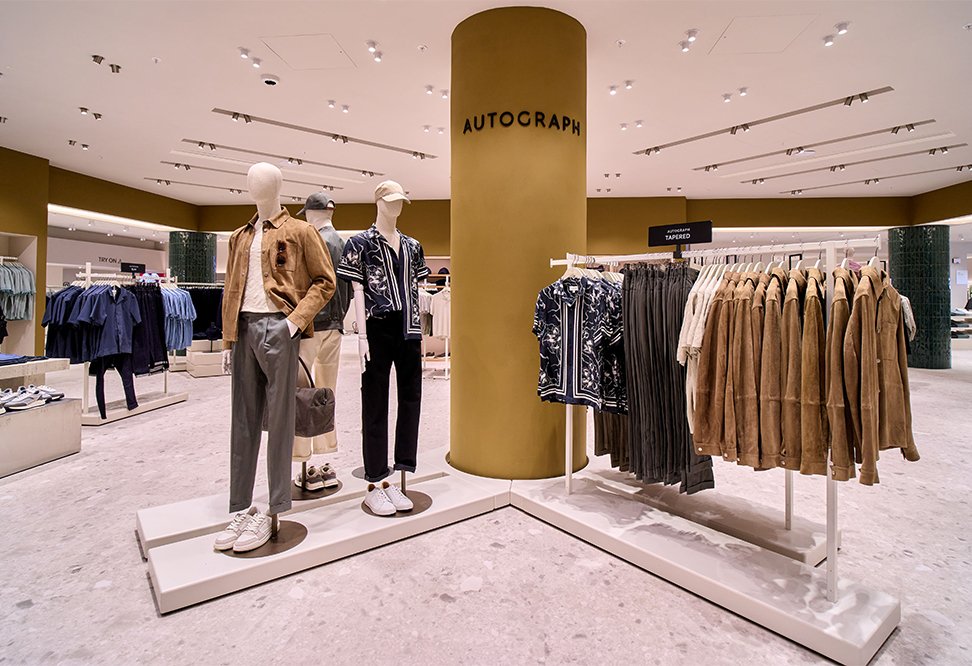
New features include made-to-order menswear suiting, dedicated lingerie and babywear rooms, a larger beauty hall incorporating third-party brands, and a specially designed homeware section. The food hall reopened earlier, while the remaining menswear, childrenswear, lingerie and home departments were unveiled in July.
A blueprint for estate renewal
The project forms part of a £700 million investment programme covering stores, supply-chain modernisation, distribution and product improvements. M&S currently operates 227 full-line UK stores but plans to reduce that network to about 200, closing unsuitable legacy locations while opening or renewing larger, more productive sites. Its food-only estate is moving in the opposite direction, with a target of 420 directly operated stores.
Pantheon is one of six London stores being renewed during the current financial year. Across the UK, M&S plans two new full-line stores, 18 new food stores, four extensions and additional refurbishments.
Fashion recovery faces an execution test
M&S has rebuilt fashion relevance and now controls more than 10% of the UK clothing and footwear market, according to Worldpanel data cited by The Guardian. However, Fashion, Home and Beauty sales fell 7.7% in the year ended March 28, 2026, after a cyberattack disrupted online trading, stock movement and product availability. Adjusted group pre-tax profit declined 23.8% to £671.4 million.
The next test is whether Pantheon’s stronger presentation converts into higher footfall, full-price sales and faster inventory turnover. For apparel suppliers, M&S’s emphasis on smaller product drops, sharper curation and improved availability may favour shorter lead times, responsive replenishment and more disciplined SKU management.
