

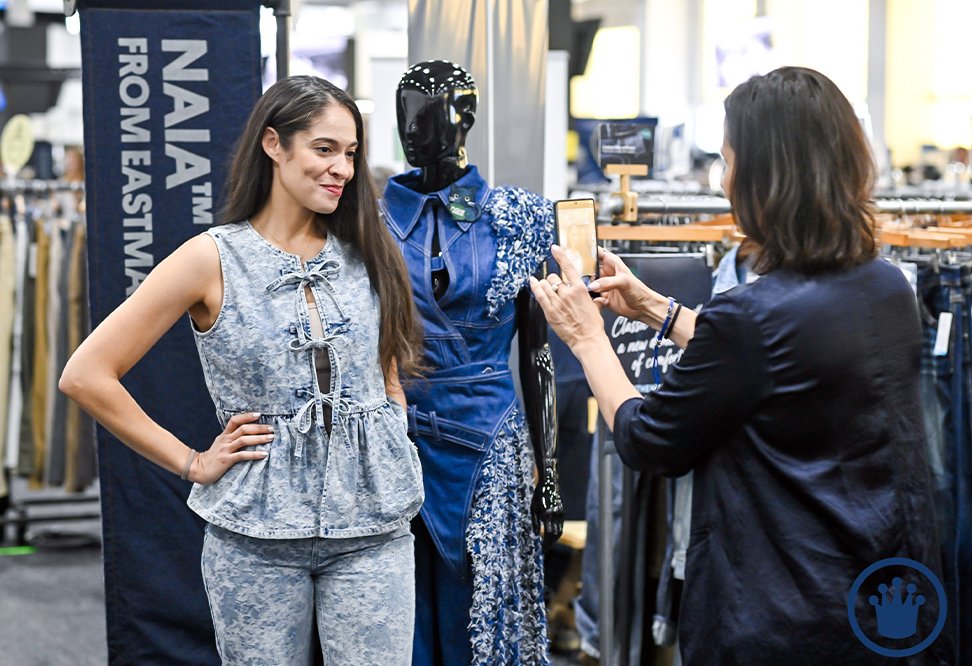
Fall/Winter 2027–28 buyers are favouring fabrics that look distinctive but remain commercially usable, combining richer colour, substantial constructions and more considered fibre blends.
Denim mills presented a broader alternative to conventional blue jeans at Kingpins New York, with coloured denim, heavier weights, printed surfaces and differentiated fibre blends emerging among the strongest fabric directions for Fall/Winter 2027–28. The sourcing event was held at Pier 36 on July 22–23, bringing together mills, manufacturers, fibre suppliers and technology companies from across the global denim chain.
Colour moves beyond seasonal novelty
Coloured denim is returning in more wearable forms, including earthy neutrals, softened shades and expanded colour families built around established bestsellers. This allows brands to introduce visual newness without accepting the commercial risk associated with highly directional fashion colours.
Printing, coatings and surface treatments are also widening denim’s aesthetic range. These technologies can create patterns, aged effects or distinctive finishes while retaining an existing base fabric, potentially allowing mills to offer more design options without developing an entirely new construction for every programme.
Structure regains importance
Heavier fabrics are attracting renewed interest for jeans, jackets, workwear and structured separates. The movement reflects demand for durability, pronounced drape and an authentic denim character after several seasons dominated by lightweight, highly flexible materials.
However, weight alone is not enough. Mills are combining substantial constructions with softer finishing, comfort stretch and improved recovery to reduce stiffness and make heavier products easier to wear. Other developments include slub-rich surfaces, dobby structures, selvedge fabrics and richer reverse-side effects.
Fibre choice becomes part of the story
Cotton remains central, but mills are using blends to add softness, stretch, warmth, recycled content or distinctive handle. Tencel lyocell, regenerated fibres, recycled cotton and performance components are increasingly selected for a defined product benefit rather than sustainability messaging alone.
The term “bestselling” should be treated cautiously because the reported fabrics reflect mill feedback, sampling and customer interest rather than independently audited sales data. The stronger commercial signal is the convergence around versatile differentiation: brands want fabrics that appear new, perform reliably and can scale without excessive cost or processing complexity.
The next test will come when sampling converts into bulk orders. Mills able to reproduce colour, hand feel and stretch performance consistently—while documenting fibre origin and processing impacts—will be best placed to turn seasonal interest into sustained business.
