

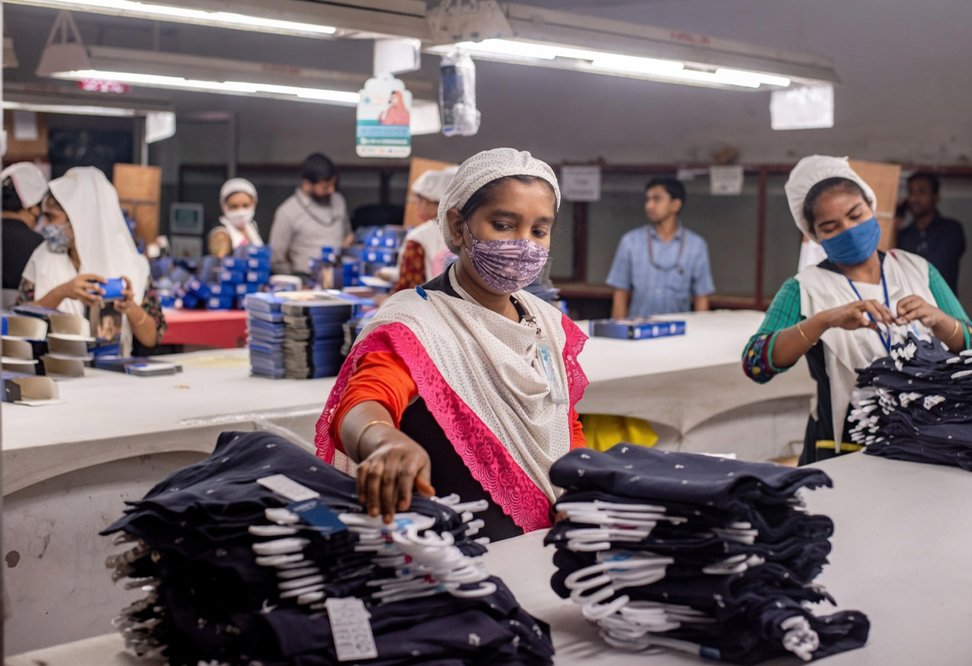
Woven apparel recorded the sharper decline as gas shortages, geopolitical uncertainty and cautious buyer demand constrained the opening month of Bangladesh’s new fiscal year.
Bangladesh’s ready-made garment exports fell 1.92% year on year to approximately $3.89 billion in July 2026, marking a subdued start to fiscal year 2026/27. Apparel nevertheless generated about 82% of the country’s total merchandise export earnings of $4.72 billion during the month.
The result was measured against an unusually strong comparison: July 2025 generated $3.96 billion, the highest monthly garment-export value previously recorded by Bangladesh, according to the Bangladesh Garment Manufacturers and Exporters Association.
Woven garments take the larger hit
Knitwear exports proved comparatively resilient, declining 0.90% to $2.15 billion. Woven garment shipments fell 3.16% to approximately $1.72 billion, accounting for most of the sector’s contraction.
BGMEA’s utilisation declaration data—a forward indicator linked to imported inputs for export production—also weakened. The value of declarations issued in July declined 2.8% from a year earlier, suggesting that near-term production and export orders remain under pressure.
Factories operate below potential
BGMEA President Mahmud Hasan Khan attributed the performance partly to Bangladesh’s continuing gas shortage, which is restricting factory capacity utilisation. Mills and garment manufacturers are also navigating geopolitical disruption, uncertain global demand and supply-chain volatility.
The July decline follows a difficult FY2025/26, when annual apparel exports fell 1.64% to $38.70 billion. Knitwear decreased 2.53% to $20.62 billion, while woven exports declined 0.61% to $18.08 billion.
Diversification provides limited cushioning
Several smaller export categories performed more strongly. Home-textile earnings rose 14.37% to $77.86 million, while jute and jute-goods exports increased nearly 54% to $85.36 million. These gains helped limit the decline in Bangladesh’s overall merchandise exports to 0.90%.
The next signal will come from order flows for the autumn and holiday seasons. Sustained recovery will depend on restoring reliable energy supplies, improving woven-product competitiveness and converting buyer enquiries into orders without further margin erosion.
