

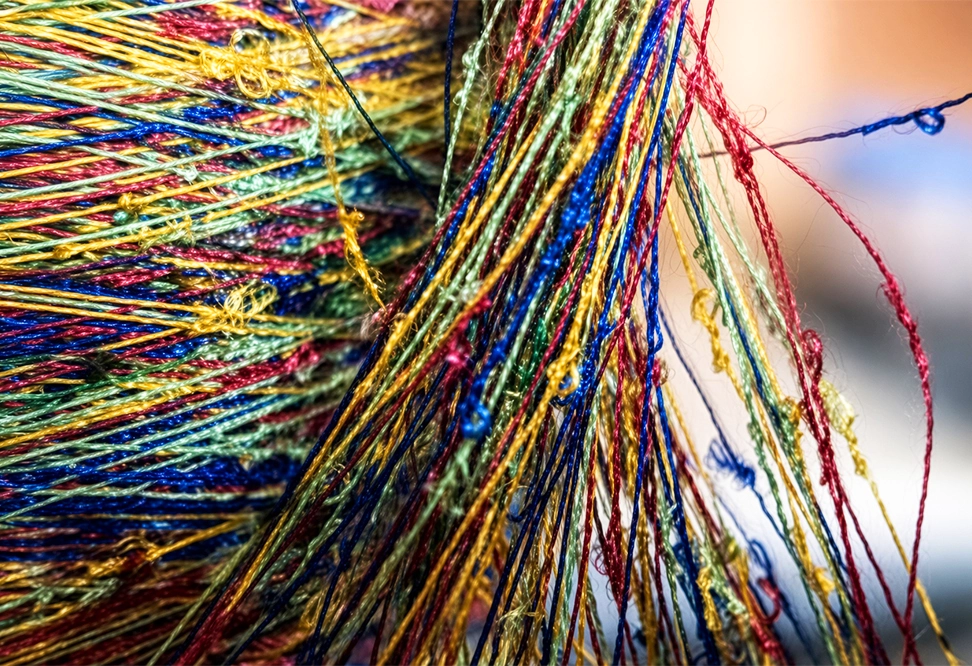
Demand for textured, decorative and differentiated yarns is expected to grow steadily as fashion and home-textile brands seek stronger aesthetics, recycled inputs and higher-value fabric development.
The global fancy-yarn market is projected to rise from $5.2 billion in 2025 to about $6.8 billion by 2034, according to Custom Market Insights. The category includes chenille, bouclé and other effect yarns used across apparel, home textiles and selected industrial applications.
Fashion differentiation supports demand
Fancy yarns allow spinners and fabric manufacturers to engineer slubs, loops, curls, variable thicknesses, colour effects and distinctive surface textures directly into yarn rather than relying entirely on downstream finishing. Custom Market Insights identifies fashion, upholstery and decorative textiles as major demand drivers, alongside growing interest in premium and technically differentiated products.
Material development is also broadening. The report covers natural, synthetic and blended fancy yarns and highlights increasing use of organic, recycled and biodegradable inputs as manufacturers respond to sustainability requirements and customer demand. Automation, digital design and AI-assisted quality monitoring are expected to improve consistency in a category where intentional irregularity must still remain tightly controlled.
Asia-Pacific gains production momentum
Europe is identified as the largest current market, reflecting its luxury fashion, interior-textile and specialty-yarn industries. Asia-Pacific is forecast to grow fastest, supported by China and India’s manufacturing scale, textile exports and investment in spinning technology.
For Asian spinners, fancy yarn offers an avenue away from commodity count competition. Commercial success depends on reproducible effects, small-lot flexibility, colour consistency and the ability to collaborate closely with designers and fabric developers.
Forecast deserves caution
The headline growth rate requires qualification. CMI states a 4.2% CAGR for 2025–2034, but growth from $5.2 billion to $6.8 billion over nine years mathematically equates to roughly 3.0% annually. The report itself also inconsistently cites 4.1% elsewhere.
The $6.8 billion forecast should therefore be treated as directional rather than precise. For mills, the stronger commercial signal is the continuing shift towards yarns that deliver visible differentiation, sustainable material options and higher value per kilogram rather than additional commodity spinning capacity.
