

Around 900 exhibitors will converge in Paris as brands face shrinking margins, volatile demand and rising expectations for quality, transparency and speed—turning technology and material intelligence into competitive necessities.
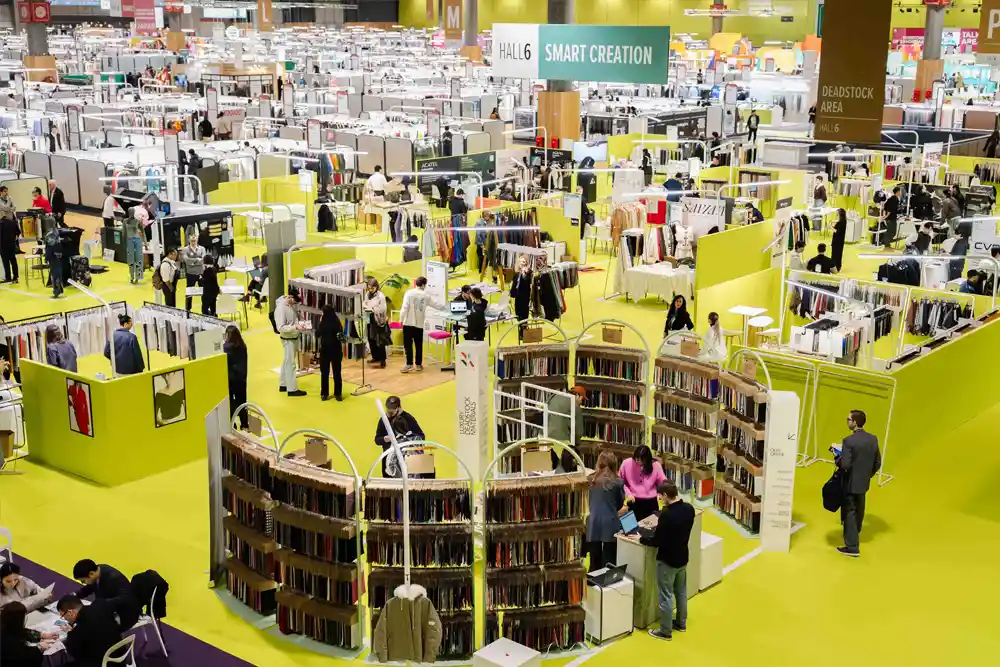
Première Vision Paris opens September 1–3, 2026 with around 900 international exhibitors, positioning innovation, technology and smarter material sourcing as central responses to the fashion industry’s increasingly difficult economics. The show at Paris Nord Villepinte spans eight sectors covering yarns, fabrics, design, accessories, leather, manufacturing, Smart Creation and finished leather goods.
Margin pressure changes the agenda
Première Vision describes an industry facing higher input costs, stagnant growth, double-digit margin pressure, volatile demand and greater inventory risk, while consumers simultaneously expect better quality, fit, novelty, transparency and value.
Its second Innovation & Technology cycle will therefore focus on artificial intelligence, automation, digital product development, advanced materials and technologies designed to reduce the environmental impact of manufacturing. More than 100 international specialists are expected to participate across talks and pitch sessions covering technology, sustainability, markets, creativity and consumer trends.
Material decisions become more data-driven
A significant new tool is the Fibers & Materials Matrix, developed with Paris Good Fashion and launching September 1.
The sourcing framework compares 60 materials across 12 fibre families using 12 criteria grouped into four categories, helping designers and sourcing teams evaluate alternative materials more systematically rather than relying on single sustainability indicators.
The show expects around 20,000 professionals representing 130 nationalities, reinforcing its importance as a global sourcing and product-development platform.
Suppliers face a broader competitive test
For textile mills and manufacturers, Première Vision’s agenda illustrates how buyer expectations are changing. Price, quality and capacity remain essential, but suppliers increasingly need to demonstrate digital development capability, material innovation, traceability, lower-impact production and faster commercialisation.
The emerging competitive advantage is therefore not one technology alone. It is the ability to connect material selection, 3D development, AI-assisted decision-making, efficient manufacturing and verifiable sustainability data into a shorter and less risky product-development cycle. The technologies receiving serious buyer engagement in Paris will offer an early indication of where brands intend to direct their next round of sourcing and investment.
