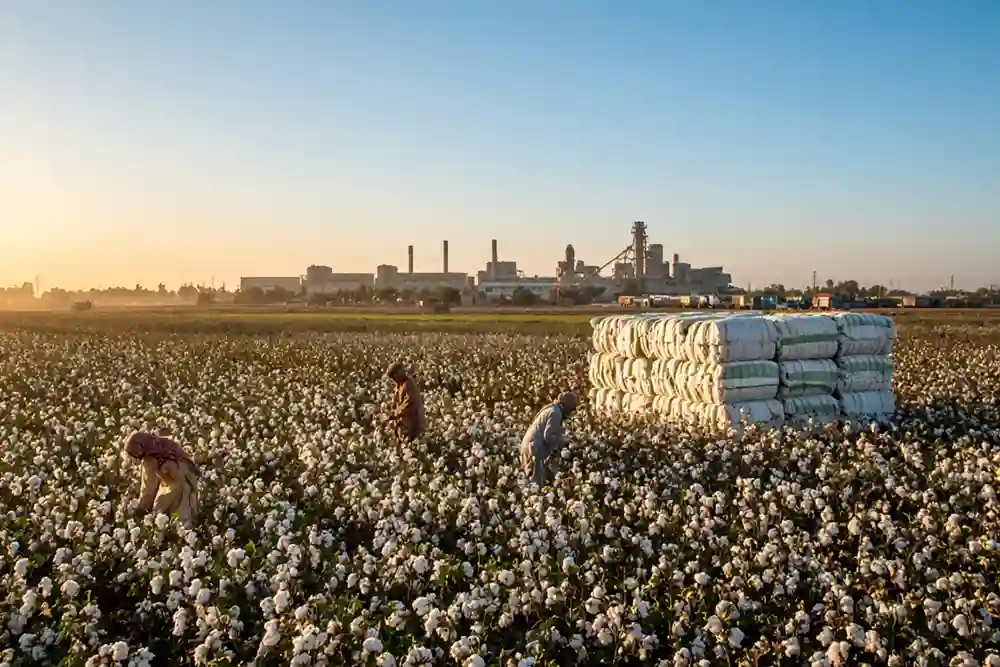
Punjab is recording the strongest percentage growth, but the crop has entered a critical stage as pink bollworm, late rains and fibre quality threaten to erode the early-season advantage.
Pakistan’s cotton arrivals reached 2.389 million bales by September 15, 2026, up 19.17% from 2.004 million bales a year earlier, according to the Pakistan Cotton Ginners Association.
Punjab recorded 860,942 bales, up 24.73%, while Sindh remained the larger producing province with 1.528 million bales, up 16.25%. Around 412 ginning factories were operating nationwide.
Mills take most of the crop
Of the total arrivals, 2.207 million bales had been pressed and 2.128 million sold. Textile mills had purchased 2.035 million bales, while exporters and traders acquired 92,800 bales.
That leaves relatively limited free stock: pressed but unsold cotton stood at 79,290 bales, while total unsold and unginned stocks were about 260,789 bales.
Sanghar remained the largest producing district at 888,607 bales, followed by Bahawalnagar at 166,400 and Dera Ghazi Khan at 146,415.
Early lead is narrowing
The headline growth rate needs context. At August 31, arrivals were 1.696 million bales, 27.0% ahead of last year. By September 15, that advantage had narrowed to 19.2%.
This means roughly 692,000 bales arrived during the first half of September, only modestly above the comparable fortnight last year. The crop is still stronger, but the pace of improvement is moderating.
Pest risk moves centre stage
Central Cotton Research Institute officials are warning that pink bollworm, unseasonal rains, timely picking and lint quality will now determine whether early gains translate into higher final production.
Local prices have meanwhile softened, with the KCA spot rate falling to about Rs19,100 per maund on September 17.
For spinning mills, stronger domestic availability is positive, but Pakistan still faces a structural cotton deficit. The decisive signals now are late-season arrivals, pest damage, fibre quality and import requirements.