Artistic Denim Mills, Akij Textile Mills and Material Return show mechanical textile recycling moving from isolated pilots toward integrated spinning systems capable of producing commercially usable recycled yarn.
German machinery group Trützschler has added three manufacturers to its TRUECYCLED reference network: Artistic Denim Mills in Pakistan, Akij Textile Mills in Bangladesh and Material Return in the United States. The expansion gives its mechanical textile-recycling platform reference installations across three major textile and recycling markets.
Recycling connects directly to spinning
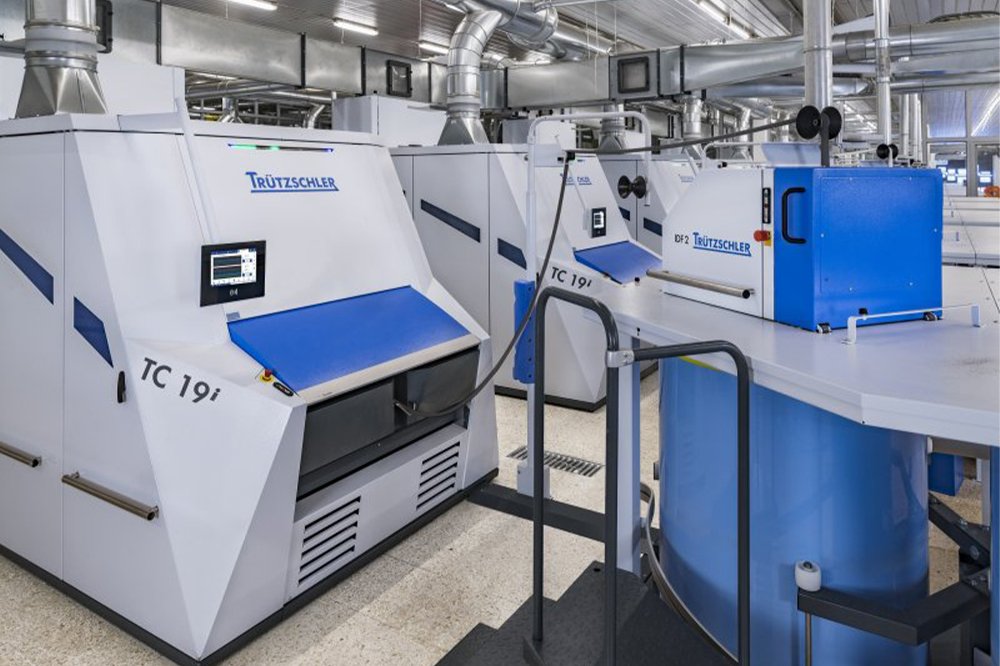
TRUECYCLED is designed as an integrated process extending from cutting and tearing textile waste through fibre opening, cleaning, carding and drawing before yarn production. Trützschler developed the recycling platform with Turkish machinery specialist Balkan Textile Machinery.
A central component is the TC 30Ri card, engineered to process recycled fibres gently while preserving usable fibre length. The IDF 3 integrated draw frame then uses shortened drafting suited to recycled blends containing high proportions of short fibres.
Trützschler says its TRUECYCLED reference customers manufacture yarns containing more than 25% textile hard waste, although achievable recycled content varies with fibre type, waste quality, tearing intensity, yarn specifications and spinning technology.
Three different circularity models
Karachi-based Artistic Denim Mills, vertically integrated from spinning preparation through garments, is using TRUECYCLED to make recycling operations more transparent and measurable. Bangladesh’s Akij Textile Mills already produces ring and rotor yarns containing recycled fibres under its RECLONE brand. North Carolina-based Material Return converts manufacturing and brand textile waste into new yarn and becomes TRUECYCLED’s first US reference customer.
Pakistan competitiveness takeaway
For Pakistan, the ADM installation is strategically important. The country generates large quantities of spinning, weaving, denim and garment-cutting waste, but much still enters relatively low-value recycling routes.
The opportunity is to develop integrated systems that convert segregated textile waste into consistent, traceable recycled yarns suitable for new export fabrics and garments.
As brands raise recycled-content requirements, competitive advantage will increasingly depend not simply on owning tearing machinery, but on controlling the complete chain: waste classification → fibre recovery → spinning preparation → yarn quality → traceability → finished product.