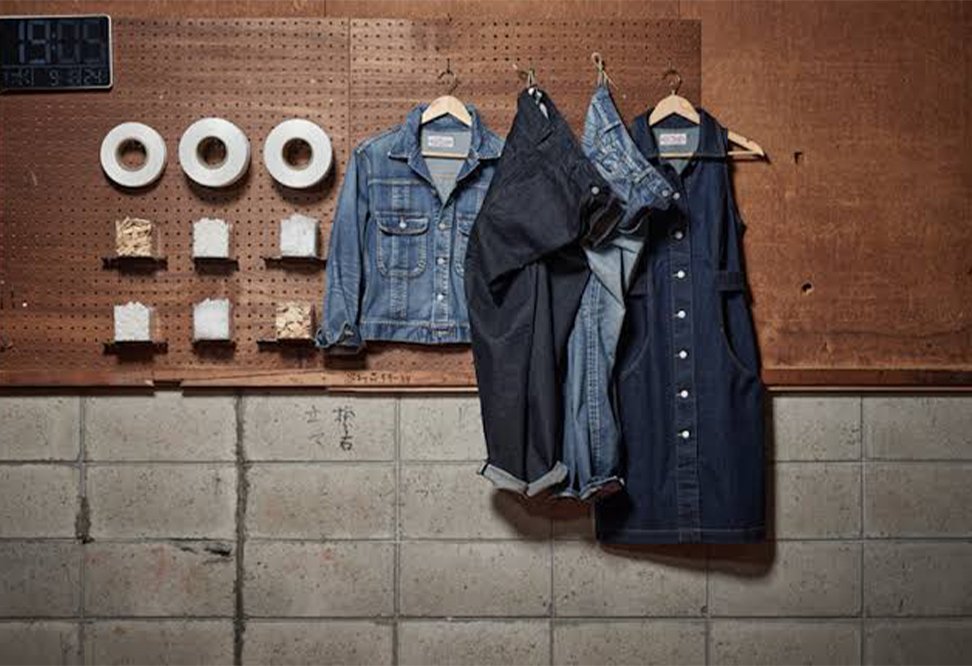
The REMOD collection demonstrates how different lyocell grades can reproduce cotton- and linen-like denim textures while giving brands access to a rapidly expanding global mill network.
Lenzing has partnered with Japanese denim specialist Kaihara Corporation to launch the REMOD Collection, a new range demonstrating how three TENCEL Lyocell fibre types can create contrasting denim textures, weights and handles—including constructions containing no cotton. The fabrics were woven at Kaihara’s vertically integrated mill in Hiroshima and will debut at Kingpins Amsterdam on October 14–15.
Three fibres, different denim identities
The collection combines TENCEL Lyocell HV100, standard TENCEL Lyocell and the coarser 2.2-dtex grade.
HV100 uses Lenzing’s Variocut technology to introduce controlled variations in staple length, producing a more irregular, opaque and matte appearance intended to resemble cotton denim. The 2.2-dtex fibre, available at 51 mm length, delivers a drier, stiffer, linen-like character, while standard lyocell contributes softness, drape and colour depth.
Applications include heavyweight jackets, mid-weight wide-leg and stretch jeans and casual shirting.
Mill network scales rapidly
When HV100 launched in October 2025, Lenzing had 17 partner mills in five countries. By April 2026 this had risen to 37 mills across nine countries; the latest cohort takes the network to nearly 50 mills across 13 countries, with India joining for the first time.
Lenzing says HV100 can be processed using existing spinning, weaving and finishing equipment and chemicals, reducing the need for additional capital expenditure.
Pakistan competitiveness takeaway
Pakistan is already deeply embedded in the network, with mills including AGI Denim, Artistic Denim Mills, Artistic Milliners, Azgard 9, Soorty, Neela by Sapphire, US Denim Mills, Rajby and others listed across the three partner cohorts.
The opportunity is therefore not merely adopting lyocell. Pakistani denim producers can use diversified cellulosic fibres to develop cotton-free or lower-cotton constructions, differentiated surface textures, lighter fabrics and premium comfort without major equipment changes.
As India now enters the partner network, Pakistan’s advantage will depend increasingly on converting its early adoption into faster product development, distinctive fabrics and larger brand programmes.