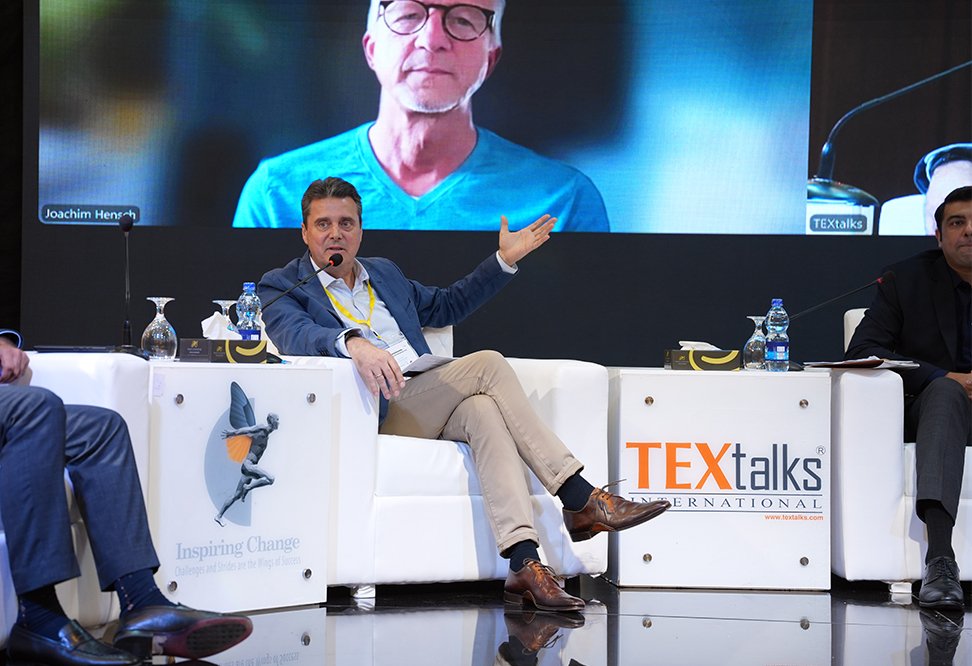
The 9th International Conference on Textiles brought together industry leaders, international experts, policymakers and sustainability specialists to explore the future of cotton, technological innovation, global trade and Pakistan’s textile competitiveness.
LAHORE, October 14, 2026: The future of Pakistan’s textile industry took centre stage as TEXtalks International organised the 9th Inspiring Change International Conference on Textiles 2026 at the Pearl Continental Hotel, Lahore. Bringing together prominent industry leaders, international experts, policymakers, technology specialists and sustainability advocates, the conference provided a platform for meaningful dialogue on the challenges and opportunities reshaping the global textile landscape.
Under the thought-provoking theme “The Future Is Behind the Door — Let’s Knock Together!”, the conference highlighted the urgent need for industry collaboration, innovation and strategic transformation in an increasingly competitive global environment.
Through three panel discussions and four expert presentations, the event addressed critical issues ranging from cotton sustainability and spinning profitability to emerging technologies, environmental responsibility, economic uncertainty and changing international trade dynamics.
Cotton at the Crossroads: Traceability, Sustainability and Profitability
The conference opened with a welcome address by Mazhar Mirza, Pakistan Representative of Cotton Council International, setting the stage for discussions on the future of the textile value chain.
In his presentation, “The New Era of Cotton: Traceability, Transparency and Sustainability,” Mazhar Mirza focused on some of the most important considerations facing the global cotton industry. The session explored the growing significance of responsible cotton sourcing, supply-chain transparency and sustainability as international brands and buyers increasingly demand greater accountability throughout textile production.
Cotton remained a central theme as Joerg Bauersachs of Cotton Council International, USA, delivered a presentation titled “The Golden Triangle of Profitable Spinning.”
The presentation addressed the foundations of efficient and profitable spinning operations, highlighting the importance of balancing fibre quality, operational efficiency and production performance. Its subject was particularly relevant for Pakistan’s spinning industry, which faces continuing pressure to improve productivity, manage costs and strengthen competitiveness.
Panel 1: From Fiber to Future — Rethinking the Textile Fibre Landscape
The first panel discussion, “From Fiber to Future: Exploring Challenges and Future Opportunities in the World of Textile Fibers,” brought together representatives from the cotton industry, textile manufacturing and international sustainability organisations.
The distinguished panel comprised:
- Mazhar Mirza, Pakistan Representative, Cotton Council International, USA
- Faisal Jawed, Director, Din Textile Mills Limited, Pakistan
- Khushbakht Jamal, Country Head, Better Cotton Initiative (BCI)
- Rubab Zahra, Country Head, Organic Cotton Accelerator (OCA)
- Dr. Javed Hassan, Cotton Advisor, All Pakistan Textile Mills Association (APTMA)
The discussion centred on the evolving challenges facing cotton and other textile fibres, including raw-material availability, quality consistency, responsible sourcing, environmental expectations and the future direction of the fibre industry.
For Pakistan, where spinning and textile manufacturing remain major pillars of industrial activity, the conversation carried particular significance. The panel examined how manufacturers and industry stakeholders can respond to changing market conditions while embracing more sustainable and transparent sourcing practices.
The presence of representatives from Cotton Council International, Better Cotton and Organic Cotton Accelerator brought different perspectives to the debate, connecting conventional cotton manufacturing with international efforts to improve responsible fibre production.
The session also emphasised the importance of industry collaboration, greater awareness of changing buyer requirements and stronger connections between growers, fibre suppliers, spinning mills and international markets.
Government Vision: Transforming Pakistan’s Textile Industry
Pakistan’s industrial competitiveness and export potential came into focus during a presentation by Mudassar Raza Siddiqi, Director General Textiles, Ministry of Commerce, Pakistan.
Titled “The Future of Pakistan’s Textile Industry: Government Vision, Industry Transformation and Global Opportunities,” the presentation placed the country’s textile sector within the broader context of economic development, industrial modernisation and changing global trade patterns.
The subject highlighted the importance of creating an environment that encourages technological advancement, greater value addition, export diversification and stronger international competitiveness.
With global textile supply chains undergoing significant transformation, the session provided an important policy perspective on the opportunities available to Pakistan and the areas requiring continued attention from both government and industry.
Panel 2: Knocking on the Door of a Greener, Smarter, Fairer Future
Innovation and sustainability dominated the second panel discussion, “Knocking on the Door of a Greener, Smarter, Fairer Future: Driving Innovation and Emerging Technologies in the Textile Industry.”
Featuring experts from the United States, Switzerland, the United Kingdom and international development organisations, the panel reflected the increasingly interconnected nature of global textile innovation.
The panel brought together:
- Neil Bell, Business Development Head, Nature Coatings, USA
- Christian Fersch, Sales, Orient, Rieter AG, Switzerland
- Sonya Parenti, Fashion Sustainability Consultant, formerly associated with Prada and Burberry, UK
- Sally Bugg, Commercial Director, The Lurex® Limited, UK
- Muhammad Ubaid, Head of Project (AV), GIZ GmbH
The discussion explored how emerging technologies, sustainable materials, responsible manufacturing practices and new approaches to product development are influencing the future of the textile industry.
With rising environmental expectations from international fashion brands, topics such as traceability, circularity, cleaner production, material innovation and resource efficiency have become increasingly important for textile manufacturers.
The diverse backgrounds of the panellists brought together perspectives from textile machinery, innovative materials, fashion sustainability and industrial development.
Nature Coatings represented innovation in alternative colourant technologies, while Rieter brought expertise from the textile machinery and spinning sector. The Lurex® Limited contributed a materials and product-development perspective, while Sonya Parenti’s international fashion experience and GIZ’s industry-development work added important dimensions to the conversation.
A central theme was the need to move beyond sustainability commitments towards practical solutions that can be implemented at industrial scale.
For Pakistani textile manufacturers, the panel’s subjects were especially relevant as exporters navigate growing international expectations regarding environmental performance, supply-chain responsibility and production transparency.
Building a New Competitive Advantage in Global Textile Trade
Another important highlight of the conference was the presentation “Building New Competitive Advantage in Global Textile and Clothing Trade” by Prof. Dr. Tanveer Hussain of National Textile University, Pakistan.
The presentation addressed one of the textile industry’s most pressing strategic questions: how can Pakistan develop a stronger competitive position in global textile and apparel markets?
With international competition intensifying and buyers placing greater emphasis on quality, reliability, innovation and sustainability, the subject called attention to the need for manufacturers to rethink traditional business models.
The presentation’s central focus was the importance of building competitiveness through knowledge, technology, product innovation, value addition and stronger alignment between academic research and industrial requirements.
The inclusion of National Textile University reinforced the importance of academic institutions in supporting industrial transformation and developing the technical expertise required for Pakistan’s textile future.
Panel 3: The Knock Is Getting Louder — Is Pakistan Ready for Global Trade Shifts?
The third panel discussion, “The Knock Is Getting Louder. Are You Ready? Responding to Global Economic Shifts and Trade Dynamics,” examined the changing realities of international trade and their implications for Pakistan’s textile and apparel industry.
The panel featured an influential mix of policymakers, industry representatives, international consultants and retail-sector leaders:
- Faiz Ahmad, Chief Executive, Trade Development Authority of Pakistan (TDAP)
- Joerg Bauersachs, Technical Leader, Cotton Council International, USA
- Muhammad Ali Chaudhry, Vice Chairman, All Pakistan Textile Mills Association (APTMA)
- Tariq Mehboob, Chairman, Chain Stores Association Pakistan (CAP)
- Joachim Hensch, CEO, Joachim Hensch Consulting and former Hugo Boss executive, Germany
The discussion addressed the strategic challenges facing Pakistan as global economic conditions, trade relationships, sourcing preferences and international competition continue to evolve.
Among the major themes were the need for greater export competitiveness, diversification into higher-value products, stronger relationships with international buyers and improved integration into global supply chains.
The participation of TDAP and APTMA connected trade-development priorities with the manufacturing sector’s challenges, while the Chain Stores Association Pakistan brought an important perspective on the growth potential of Pakistani fashion and retail brands.
Joachim Hensch’s international apparel-industry experience provided a valuable perspective on global sourcing, manufacturing transformation and the expectations of international fashion businesses.
The panel also brought attention to an important question for Pakistan’s textile future: whether the country can move beyond its traditional strengths in manufacturing and establish a stronger presence in value-added apparel, product development and international branding.
As the global textile marketplace becomes more demanding, the session underscored the importance of coordinated action among policymakers, manufacturers, exporters, brands and industry institutions.
Create2Inspire 2026: Celebrating the Next Generation of Fashion Talent
Adding creativity and excitement to the conference was the 6th Create2Inspire Student Design Competition and Fashion Ramp Walk, which provided a platform for emerging fashion designers from universities across Pakistan.
The ramp walk showcased innovative designs and the creative potential of young talent, reinforcing TEXtalks International’s commitment to strengthening connections between education, fashion and the textile industry.
Hafiza Sidra Tul Muntaha of Punjab Tianjin University of Technology, Lahore, secured first position, followed by Fatima Ali of National Textile University, Faisalabad, in second place and Zain Ali of the University of Kamalia in third place.
The competition also benefited from the participation of professional jury members representing Sapphire Retail Limited and ETHNC, bringing valuable industry expertise to the evaluation process.
Create2Inspire complemented the conference’s central message by demonstrating that the textile industry’s future depends not only on technology and trade, but also on creativity, fresh thinking and the development of the next generation of industry professionals.
A Shared Vision for the Future
The event concluded with a vote of thanks by Yousaf Fareed of TEXtalks International, followed by a networking dinner that provided opportunities for delegates, speakers and industry representatives to strengthen professional connections.
Across its presentations and panel discussions, Inspiring Change 2026 brought attention to several interconnected priorities: the future of cotton, profitable manufacturing, responsible production, technological advancement, industrial competitiveness and the changing landscape of global trade.
Perhaps the most significant message emerging from the conference’s programme was the importance of collaboration. Sustainable progress cannot be achieved by manufacturers, policymakers, technology providers, universities or international organisations working in isolation.
By bringing these stakeholders together under one platform, TEXtalks International reinforced the role of Inspiring Change as a forum for exchanging ideas, encouraging innovation and advancing the long-term competitiveness of Pakistan’s textile sector.
As the industry’s challenges become more complex and international expectations continue to rise, the conference’s theme offered a fitting reminder:
“The Future Is Behind the Door — Let’s Knock Together!”
The opportunity for transformation is there. The challenge now is turning ideas into action.