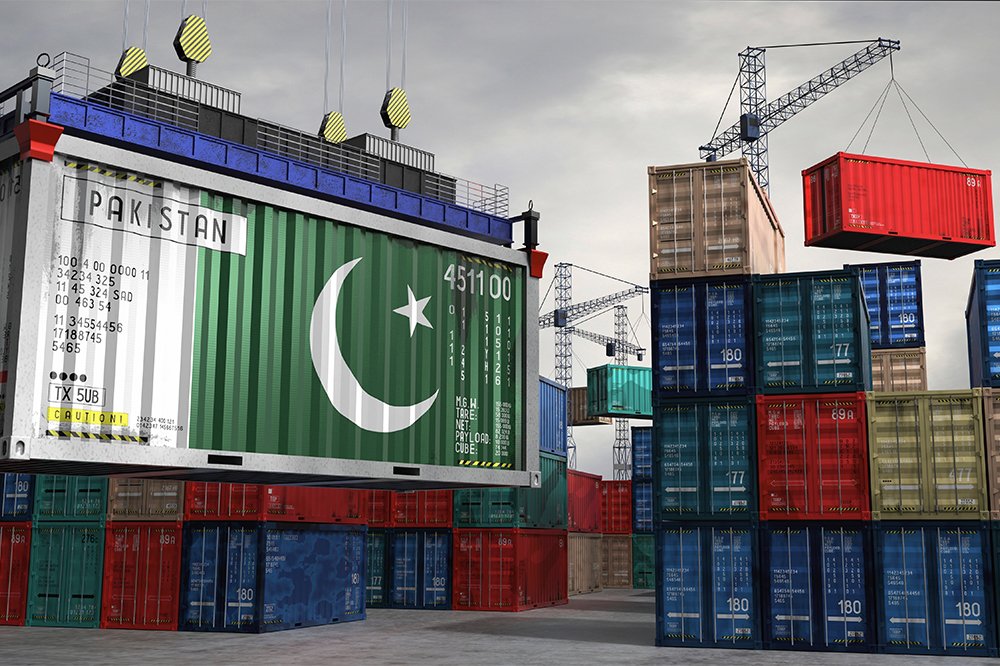
Finance Minister Muhammad Aurangzeb confirms that tariff reforms will continue, promising cheaper imported inputs for exporters while exposing protected domestic industries to greater international competition.
Pakistan will continue reducing import tariffs and industrial protection as part of its transition towards export-led economic growth, Finance Minister Muhammad Aurangzeb announced on October 24, 2026.
Speaking at the Lahore University of Management Sciences (LUMS), Aurangzeb rejected a return to consumption-driven economic expansion, arguing that previous growth cycles had repeatedly triggered balance-of-payments crises.
Tariff Reductions to Continue Until 2030
Under Pakistan’s National Tariff Policy 2025–30, the government aims to reduce the overall simple average tariff from 20.19% in FY2024–25 to 9.70% by FY2029–30.
The policy establishes four customs duty slabs—0%, 5%, 10% and 15%—and provides for eliminating additional customs duties within four years and regulatory duties within five years.
The FY2026–27 budget already reduced customs duties on 92 tariff lines covering industrial inputs, alongside broader reductions in additional and regulatory duties. Aurangzeb reiterated that longstanding industrial protection without defined expiry periods was unsustainable.
Mixed Implications for Textile Manufacturers
Lower tariffs on imported fibres, yarns, fabrics, dyes, chemicals and machinery could improve cost competitiveness for Pakistan’s textile and apparel exporters. However, domestic spinning, weaving and processing manufacturers could face stronger competition from imported intermediate products.
The government has introduced concessional export financing at 4.5%, while discussions have included supplying surplus electricity to industry at approximately Rs23 per unit. The latter remains a proposal rather than a universally implemented industrial tariff.
Economic Stability Supports Reform Agenda
Aurangzeb reported that Pakistan’s combined fiscal and current-account deficits had declined from 12.5% to 2.6% of GDP by FY2025–26. Foreign exchange reserves now cover more than three months of imports, while IT services exports are projected to reach $5.5 billion during the current fiscal year.
For textile exporters, tariff liberalisation offers potential savings, but competitiveness will also depend on energy prices, productivity, financing and exchange-rate stability.
The next test is whether further tariff reductions translate into stronger textile exports and industrial investment without undermining viable domestic upstream manufacturing.